We wake up early morning, usually 7am. I open my eyes and my daughter is smiling back at me, just awoken too. By now our biological clocks have become in sync and it’s beautiful. “Good morning mamy!” she says cheerfully. The excitement and enthusiasm of our child to start the day is always contagious no matter what. “Where are we going today?” Mayoosha asks me. We lay in bed as I talk to her about all the things we are going to do. “Yaaaay!” she tells me brightly.
We get up to brush our teeth together and Mayoosha loves picking out her outfits each time. Even though we have our little disagreements about what should be worn that day, Mayoosha insists on wearing her favourite bunny summer dress or glittery skirt she picked out at the store that day, despite me telling her it’ll be too cold out and that all her stockings are in the laundry. Style conversations stretch over the fields of why’s, how’s, and where’s for several minutes until we arrive at a fashion consensus!
At her age, Mayoosha also proudly loves to help in the kitchen and wear her chef’s apron. She cracks the eggs, makes an omelette and brews two cups of tea superbly well (a spoonful of honey is a must!).
We also have a routine where we start a new kind of learning activity daily. I always tend to keep a long list of exercises, activities and themes I would like to cover with her.
In this post, I am going to share a couple of favourites that nurture developmental skills at 3 years old.
ROLE-PLAYING: POST OFFICE
Role-play has been our daughter’s utmost favourite activity. I love seeing her play pretend and imagine taking on a profession, character or scenario.
One of the top reasons why role-play is essential is that it encourages creativity and imagination.
Moreover, since role-playing almost always involves two-way play, it enhances communication skills that can also be implemented in real life later on. Mayoosha tends to take on the active role while I am the passenger, the guest, the customer, or the student for instance. Therefore, she conveys the main messages which builds confidence in interactions. It’s also a great vocabulary builder.
Related to point two, role-play also strengthens social skills.
Some great role-play themes have been:
Post office
Hair/Beauty Salon
Airplane (pilot, flight attendant and passenger)
School (Teacher and student)
Supermarket shop (selling and buying)
Restaurant (cooking food and serving)
We have even switched roles for laughs where Mayoosha was me (mama), and I pretended to be Mayoosha.
When playing post office, Mayoosha enjoyed wrapping some of the items while I kept the other objects as surprises to have fun unwrapping. She enjoyed writing letters as we waited in the other room for her to deliver them. It was really cute opening the letters and seeing her little messages or drawings. We took turns working at the post office and Mayoosha loved opening our letters for her too.
Then there’s the element of surprise when unraveling the package.
Post office pretend play:
Kraft paper and envelopes
Scissors
Stamps or washi tape stamps
Stickers
Twine
Little bell
Pen and letter paper
A variety of surprise items to wrap
Basket
Post office role-play. We wrapped parcels together using kraft paper and twine.
Kraft envelopes and washi tape stamps
2) CUTTING FLOWERS
Ever since Mayoosha started practicing with scissors, she’s been enjoying cutting a variety of things, whether it’s hair, opening a chocolate wrapper, threads, paper and so on.
If you have a dried bouquet, save it! I was going to cut the flower (rose) heads and use them for arts and crafts later on, so I told Mayoosha to help me out and use her scissor-cutting skills to snip them. Since the flowers are drier and more brittle than fresh stems, it makes for easier cutting.
3) SENSORY: ‘COOKING’ with SLIME
My daughter was always interested in slime. Each time we enter a toy shop, slime was the first thing she wanted to look for. I avoided slime activities in general because of how messy they get and only allowed it occasionally. There are different kinds of slime, meaning each type differed in consistency. Therefore, some slime tended to be stickier and harder to clean up than others.
However, I spotted this one nice slime box set in Fantasy World and decided to purchase it for Mayoosha. I totally understand the fascination now. The texture is hard to resist haha! Lots of pulling, stretching squishing, rolling, and twisting! There are so many benefits including getting creative like adding in ‘ingredients’ such as beads, foam balls, pompoms, and glitter into the slime.
One of the ways that Mayoosha loves playing with slime is pretending to cook with it and making a recipe. She gets a toy pot from her kitchen and starts adding in batches of slime and combining ‘ingredients’ into it. She mixes the concoction with her hands and spends endless time feeling the textures and ‘kneading’ in elements. At this age, kids continue to enjoy the tactile and feel of different textures.
When playing with slime, it is best to use an empty activity table and lay out a washable mat that you can wipe clean quickly.
4) STEM ACTIVITY: PLAY DOUGH AND TOOTHPICK STRUCTURES.
This activity occupied Mayoosha for a while since she loves play dough in general.
There are printables of various structures to build from that are more suitable for older kids. In Mayoosha’s case, we just focused on open-ended play and assembled something simple like a little house, cube or pyramid in 3D although they can also be 2D shapes
I first rolled a couple of play dough balls in preparation, and Mayoosha practiced rolling the balls with her palms too.
We then had fun connecting the play dough balls together using the toothpicks, which you need to becareful with too.
5) BICYCLE RIDES
This is more of an outdoor sports activity. I highly suggest starting to get a bicycle with training wheels from 3 years old. Prior to that, Mayoosha used a tricycle.
The bicycle we got is by B-TWINS from the Decathlon store (in Kuwait). I loved how the bicycle was equipped with everything and you can choose to include “add-ons” like a basket, bell, water bottle holder, and a doll seat at the back. The bike also comes with front and back lights for nighttime rides.
The small training wheels at the back serve as balancing wheels. Whenever Mayoosha accelerates her speed the training wheels become suspended above the ground allowing her to get a feel for balance. It is a super safe, quality bike and sturdy. I also see the bicycle as one of the stepping stones to independence and offers the freedom and confidence to get around (with mom and dad of course!) as it is essentially a vehicle.
I believe this is one of the best active activities that a preschooler can participate in.
We decided to welcome the New Year in at Azerbaijan, a country bounded by the Caspian Sea and Caucasus mountains.
A former state of the Soviet Union, Azerbaijan is considered to be part of Eastern Europe as well as Western Asia and it was super interesting to see how its culture crosses between Soviet, Turkish and Iranian influences.
Flying over the snowy mountains of Iran.
The flight from Kuwait to Azerbaijan is almost two hours. We arrived at the Heydar Alyev Airport, named after the president who led Azerbaijan during its Soviet time.
At the airport, we went through an e-visa system after which we boarded a taxi and drove to our hotel. The air was very chilly – it was 4 degrees celsius!
I love looking out the window during the drive from any airport right to our destination. The glimpse of buildings, people and streets passing by gets one excited about what’s to come in a new place.
Marriot Hotel
Thirty minutes later we arrive at our hotel and we unpack, settle in, and change to get ready for our first exploration of Baku, the capital.
Nizami Street – Large Pedestrian Street
At this time of year Nizami Street is a jolly place to be – complete with a winter bazaar, Christmas jingles, festive lights and a cheerful crowd.
After a walk through the winter booths selling roasted chestnuts, coffee, snacks, winter fair games as well photo opportunities with Santa Claus himself, we headed for dinner at an Azerbaijani restaurant called AYDA.
The Dushbara Soup
One of the dishes I looked forward to trying was the signature Dushbara soup indigenous to Azerbaijan. This is a lamb based soup with mini lamb dumplings (dushbere) floating inside. It is always served with some vinegar on the side for acidity. Ever since we arrived at Azerbaijan, this has been my go-to warm starter at every restaurant.
Gürzə
Another dish (because I love dumplings) is Gürzə. These are larger versions of the small Dushbere dumplings and come with a sour cream or yoghurt dip.
The Next Day
Elderly men playing giant chess
There are many places in Baku named after Heydar Aliyev, so when we asked the taxi driver to take us to Heydar Aliyev Cultural Center (the museum), we were taken to a plaza of the same name instead. Since we were there we had a walk around.
Heydar Aliyev Museum by Zaha Hadid
Afterwards, we went to the actual Heydar Aliyez museum designed by architect Zaha Hadid.
The museum has a lovely outdoor area with a modern kids playground and a vast green space to walk around. The entire place looked very clean, expansive and modern.
We entered the museum’s first floor, which displays the different traditional national costumes of Azerbaijan followed by musical instruments, copperware, swords and various ancient tools.
What I found cool about the musical instruments section is that each type of instrument had a ‘listening pad’ next to it that is activated once you step on it. The sensory pads trigger the audio speakers from above your head and you can listen to the distinct sounds of each instrument.
The second floor hosts even more instruments and I was pretty mind-blown at the sheer diversity of them. There were up to 200 of them on display, each with a unique design.
A circular installation made of words
One of my favourite parts of the museum was on the last top 3rd floor housing an astonishing collection of handmade one-of-a-kind dolls from Azerbaijan, Ukraine, Latvia, Italy and other parts of Europe.
handmade Pinocchio doll from Italy
Handmade doll from Ukraine
Handmade doll from Azerbaijan
I was amazed at the detailing and artistry of these dolls most of which were made by winners of international doll festivals and biennales. There are about 300 dolls in total and some made in porcelain, paper, plastic, wood as well as fabric. Each collection of dolls explore themes like dress history, comic characters, holidays, fairy-tale characters and so on. I’ve always thought that being a doll collector would be a cool hobby have.
After our trip to the museum, we headed back to Nizami Street for lunch. We went to an underground restaurant called Dolma for Azerbaijani food with the aim of trying their infamous dish called Shah Plov.
Shah Plov at Dolma Restaurant
We had checked some of the restaurant reviews in Baku and were recommended Dolma. The underground dining area resembled an old city which I loved.
The Shah Plov
The saffron-infused rice in this dish is cooked with tender lamb and tossed with chestnuts, raisins and dates. The entire thing is wrapped in a delicious, crispy filo crust or thin crunchy lavash. How much more delicious can this get?
The waiter cut open the shah plov as one would a cake, and everything came steaming out.
Chestnuts are a staple of winter in Azerbaijan and can be found in many dishes. I loved this! I said yes to every dish that contained chestnuts during our entire trip.
Preparing for New Year
That evening we got ready to celebrate the New Year at Highland Park, a large panorama ‘viewing’ square overlooking the Caspian Sea (by the way, it’s the largest body of inland water in the world!) and also home to some of the best black caviar.
We bought some New Year snack items to celebrate with from the local supermarket called BRAVO beside our hotel. I always enjoy exploring the supermarkets of any new country as it reveals a lot about the character of the place and I love checking out their groceries. A great deal of the items are purely in Azerbaijani and Russian language.
A cute wooden house with a celebratory cake inside.
Meter-long holiday cookie/biscuits collection
Sweet Corn Puffs – childhood snack
Something I enjoyed at Azerbaijani supermarkets as well is that I found a lot of childhood snacks I used to enjoy back in Ukraine that I couldn’t find anywhere else. One of these is the ‘sweet corn puffs’ which is typically available in Eastern Europe and was widely available in Soviet times. The puffs are thick and coated with fine sugar powder, they are very addictive! The last time I had these was when I was just a kid, so this was really nice and nostalgic.
Stocking up on ROSHEN chocolate
Another exciting thing I found were ROSHEN chocolates, a Ukrainian confectionary manufacturing group. We ate ROSHEN chocolates regularly back in Ukraine, so when I found them available in Azerbaijan it was a sweet gold mine for me.
Back at the hotel we hung out at the New Year’s Eve Party before heading up to Highland Park. An hour before New Year, the park was already packed on the terrace but we did manage to find a good viewing spot for the fireworks. The flight of stairs leading up to the park were lit up and the silhouettes of people going up looked really cool.
Happy New Year 2023!
Up to the Mountains in Shahdag
The following day we took a 3-hour journey to Azerbaijan’s ski resort Shahdag.
Ride to Shahdag passing villagesDrive to Shahdag
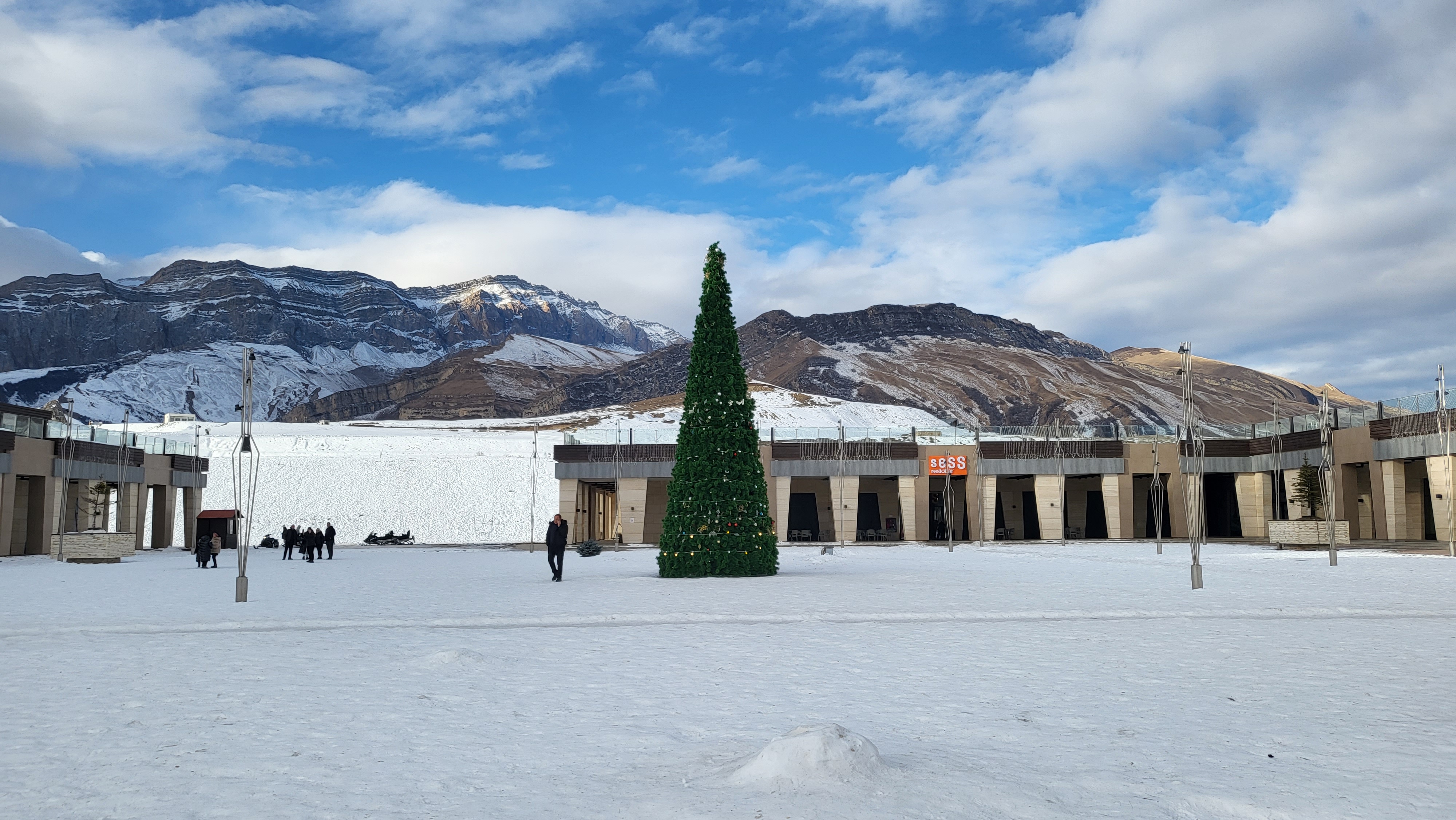
Temperatures in Shahdag typically reach below zero degrees celsius but during our stay it didn’t drop below that and the skies were clear and sunny which was pure perfection. There’s nothing better than blankets of snow and the warmth of the sun.
We stayed at the new Pik Palace Hotel for two nights, situated at the top of the mountain.
Hotel view overlooking the thermal pool and skiing area.
Activities
The first activity we tried was sleighing for kids. There were different styles of sleighs to choose from.
Another great and exhilarating activity is the ‘Coaster’.
At the beginning I thought it would be more of a slow cruise on the rails around the mountains but it turned out to be more of a roller coaster. Each ride contains two seats (back and front) with two levers on the sides at the ‘driver’s’ seat. The levers serve as a break as well as speed accelerators. The rails don’t have loops as a roller coaster does, but rather sharp curved turns and drops.
Since I am not a big fan of rollercoasters or any thrilling entertainment rides, I took it slow at first because I also didn’t want to spook my daughter who, turns out, had a blast and loved the speed. I on the other hand was somewhat pressured to use the lever to its utmost capability as there were couples behind me who clearly wanted to go at it at full swing. I didn’t want to be a bore to both my daughter and myself either, so we enjoyed the thrilling ride of frosty currents on our faces as we meandered around snowy mountain views!
Since the ride took us downwards, we then had to hop on a second time to ascend back up where we came from.
After the ride, we enjoyed frolicking in the snow, having fun with snow ball fights and made snow angels before returning back to the hotel for some warmth. Meanwhile my husband went skiing, as the activities of the day close at 5pm daily.
Horse-riding around the mountains.
Dinner at Shahdag
We decided to have some dinner at a restaurant nearby called ALOV. Our driver, who took us around in a big van, made a stop at the dining place a bit further ahead from our hotel.
Cozy outdoor seating
One of the dishes we ordered was tenderloin with chestnuts. It was really tasty!
The Following Day
In the morning we hopped on to the cable car ride. These were one of the those rides that only had a seating for three people and a simple railing in front for safety while the remaining cabin was exposed. There is, however, a way to lower the protective window down as well.
View of our hotel from the cable car ride
We reached to the top of the mountain peak, a viewing spot from which skiers launch on their slopes.
Lunch at a Village
Our driver took us to a nice place near a village that has enclosed wooden cabins to enjoy lunch in. There is no menu, but rather we were told that they’ll bring us their specialty food of the area.
The local village butcher could be seen nearby preparing the meat, and rows of large samovars were brewing tea.
An assortment of meat cooked for 14 hours
As with all dining places in Azerbaijan, we were offered pomegranate juice with our meals.
The place also had a nice playground nearby, and my daughter spent some time there before the food was brought in.
Persimmon fruits hanging from a winter tree
After our lunch, it was time to get on our 3-hour ride back to Baku through which we dozed off.
On the way, the driver had told us that we’ll be passing by a village called Quba. Quba is a Jewish village in Azerbaijan and it is characterised by red rooftops hence it is also known as ‘The Red Town’ or ‘The Red Settlement’. The village is believed to be the world’s only all-Jewish village outside of Israel and the United States which is interesting. I would have loved to explore the place but it was already getting late and we had a long drive ahead of us.
We did make one last stop at a honey and jam shop on the mountains. We bought 3-year old honey in a nice handmade pot, it was of a pale-yellow colour and in a crystallised state.
This photo of Quba was taken from Google Images.
Upon returning to Baku
After some rest back at the hotel, we decided to have a relaxing walk at Baku Boulevard which also happens to be where Baku Eye is located and the signature Flaming Towers landmark.
On a beautiful evening we got on the ferris wheel for a nighttime view of Baku.
The Next Morning: Visiting the Old Baku
One of my favourite things to do in any city is to visit the old parts. We arrived in the Qosa Qala Qapisi area in the morning and went to have breakfast at Cey Begu overlooking the old city and the Caspian Sea.
Azerbaijani breakfast is similar in style to Turkish breakfasts in that we were served small sharing platters of different cheeses, olives, jam, honey, menemen (Turkish eggs & tomato), cheese pastries and of course delicious freshly baked bread. There was one Azeri breakfast dish though called “kuku”.
Azer egg-based breakfast starter called Kuku
The dish is actually Persian in origin and includes herbs, finely chopped vegetables, sometimes meat, all of which are bound together with eggs and browned on a skillet. The herbs/vegetables to egg ratio is bigger so it’s not really an omelette although it does resemble one. Kuku is served with some sour cream or yoghurt on the side.
This reminded me of the dill omelette my mum would make for us.
Some Azer touches around the restaurant.
After breakfast, we explored the streets and bought some souvenirs from the area.
We got our daughter one of these Azeri dolls dressed traditionally.
We then stopped by a couple of small, cute galleries on the way.
Entrance to a gallery.
Azeri copperware
We passed by quite a lot of hand-forged antique copperware. There is a village in Azerbaijan called Lahij which is one of the oldest villages in Azerbaijan and home to the traditional practice of making and using copper craftsmanship in caucasus.
Azerbaijan is also traditionally known for making rugs and carpets.
50,000 tonnes of different kinds of pomegranates are grown in Azerbaijan!
In Azerbaijan, the pomegranate is regarded as the king of fruits. I hadn’t known that there were that many varieties of them. The fresh fruit is sprinkled on meat, bread, sweets, and also widely served as a drink everywhere.
The Yasil Bazaar – one of the biggest bazaars in Baku
Surprisingly when we arrived at the bazaar, it wasn’t crowded at all. The bazaar is mostly filled with cheeses, nuts, dried fruits, tea, jam and honey items.
An Azeri babushka. We kept bumping into each other at the bazaar and she kept telling me something in Azeri that I didn’t understand.
One of the things we were on the lookout for was the Sheki Halwa, specific to the Sheki village. The dessert is made of rice flour, hazelnuts, cardamom, saffron, and doused in either honey or a sugary syrup.
We bought this Sheki Halwa, which is traditionally packaged in a carton/cardboard box (not plastic).A shop filled with pickles.
Walnut Jam
Another Azerbaijani specialty that we sought is Walnut jam. Walnut preserves are a traditional delicacy made from early, green walnuts. The preserves are highly prized, as their preparation is laborious and time-consuming.
I spotted these soviet style pots that my grandparents would have in their kitchen. Very nostalgic.Variety of fruit preserves
Farm eggs
The best caviar comes from the Caspian sea, home to the Beluga, Osetra, and Sevruga sturgeon fish.
Varieties of tea, including pomegranate tea which has a nice sour taste.
Last Day in Baku
On the last day in Baku, we had lunch at a well-reviewed, popular place called Chayki.
There is an indoor seating area as well as outdoors, and we opted for the outdoor enclosed terrace with a view of Baku Eye near the sea.
It’s a very pleasant and cozy dining area.
Qutabs
For starters, we loved qutab. This national Azeri dish is a flatbread folded with meat or cheese. We picked the meat one and the dough in these is paper-thin which is baked on a traditional panfrying pan. They are super delicious and I am planning to make these back home!
For drinks we ordered compote, which surprisingly to me is also a popular drink in Azerbaijan but then again it’s popular in many former soviet countries. Compote is a pink fruit drink that I loved (and still do) back in Ukraine. I even make compote back home in Kuwait and it brings back so many childhood memories.
The main dish was the dolma – Azerbaijani stuffed vine leaves consisting of lamb meat, rice and yoghurt on the side.
Dolma
For dessert, we had the infamous delectable Napoleon cake. You could find this cake literally everywhere here in Azerbaijan whether it’s in supermarkets or restaurants. Napoleon is a cake my mum would bake for us on special occasions. It is a classic soviet cake resembling the French mille-feuille and contains multitude of layered flaky puffy pastry with custard/pastry pudding-like cream in between. The cream itself softens the flakes.
Napoleon Cake
Another delicious dessert that’s found on a lot of menus here is the Honey Cake, also known as Medovik, and it is popularly eaten in Ukraine and other Soviet countries. The toasty layers in the cake are soaked with honey and then slathered with sour cream frosting.
Honey Cake
Before leaving, I had requested to have some jarred white cherry jam.
White cherry jam is a wintery delicacy enjoyed in Azerbaijan and it’s another one of their specialties.
White Cherry Jam
And that pretty much wraps up our trip to Azerbaijan. We had a great time learning about and experiencing this country. I found it fascinating how much cross-cultural influences there were especially from the Soviets. The people in Baku are also super friendly, welcoming, and caring with children.
If we were to return to Azerbaijan, I would definitely explore more of their villages.
I’ve been getting back into exploring the art scene here in Kuwait and decided to book a glass bead-making experience at YADAWI with bead maker Lubna Saif, who is also the co-founder of the platform.
The work station
Yadawi is housed next door to the Bayt Al Othman Museum, and has several workshop spaces within for decoupaging, macrame, printmaking and calligraphy as well as studios for artists, an arts and crafts supply shop and lastly a large glass-making atelier. Yadawi is the first center of its kind in the Gulf dedicated to glass arts.
The glass-making space has several work stations for bead-making as well as a section for glassblowing and making glass structures conducted by instructor Mohammed Alduwaisan of @Gizaz_art.
My workshop was a ‘bead making taster’, so I was going into an introduction to creating beads from glass.
Murano Glass Rods laying on rod rests.
Getting started
First we started with a demonstration on how to use the glass rods and the various hand manoeuvres required when working with them under the flame.
Glass needs to be introduced to the flame gently by rolling the rods back and forth with your fingers whilst bobbing them in and out of the flame. This bobbing technique prevents the glass from cracking when inserted into high temperatures. The slower the hand movements, the slower the glass moves when beginning to melt. I had initially moved the rod around quickly to catch up with the glass drooping as it melted, but it turns out that this only makes the glass move faster. Therefore, there were several things I had to keep in mind whilst playing with the glass.
Pulling stringers
When it was time to go behind the flame myself, I tried my hand at pulling stringers first. Basically, I first learned how to create a “gather”, which is a mass of molten glass at the tip of a glass rod. Once the gather is big enough, I could use tweezers to pinch the glass and wait for the right moment to pull it. Timing is everything in this.
Here, instructor Lubna Saif has created a ‘gather’ at the tip of the rod when melting it, and getting the tweezers ready to pull the glass into a stringer.
The stringers, which are then used to decorate a bead.
Making the bead
After a warm up stretching stringers, it was time to make the actual bead!
My work station, all set up!
To make beads, essential equipment is required of course. A torch with a well-ventilated area consisting of a hood, a fuel source, mandrels, bead release, glass rods, tweezers, and most importantly safety goggles.
Glass bead-making terms
A ‘bead release’ is what each of these metal sticks (also called mandrels) are dipped in. As you can tell, the mandrels have grey coloured tips and once warmed up in the flame, the glass permanently sticks to them.
Mandrels
To get started, I selected the colour of the glass rod I wanted and held it in my dominant hand. I waved the rod in and out of the flame in order for the glass to adjust to the change in temperature and to avoid a “shock” (heating it directly will cause the glass to shatter/crack).
Then, the tip of the glass begins to turn red and that’s when I would start to roll the glass rod back and forth between my fingers for even heat distribution. This movement needs to be consistent to avoid the glass from drooping or cooling.
I take the mandrel (dipped stick) into my other hand and warm it up simultaneously, focusing on both of my hands doing two different things – one hand is rolling the glass rod while the other keeping the mandrel horizontally and moving it in and out of the flame and preparing it for the incoming hot glass rod.
An example of the glass rod in one hand, mandrel in the other.Glass rod making contact with the mandrel to make the bead.
Once the glass rod touches the mandrel, I roll the rod on to it whilst rotating the mandrel away from me. This sounds difficult but with practice, it becomes mesmerising and enjoyable to the point that one wants to make one more bead after another.
Once I am satisfied with the bead, I gently pull away the glass rod allowing the flame to cut the trailing string.
Meanwhile, I put down the glass rod but continue to heat the bead on the mandrel – shaping it to perfection and evening out any bumps or inconsistencies to make it rounder. The practice is similar to roasting a marshmallow!
Smoothing out the bead I created.
At this point, I can also introduce a stringer to decorate the bead with dots, florals or swirls. As I mentioned above, a stringer can be compared to a delicately thin glass pencil that is used to draw lines or other details on the bead.
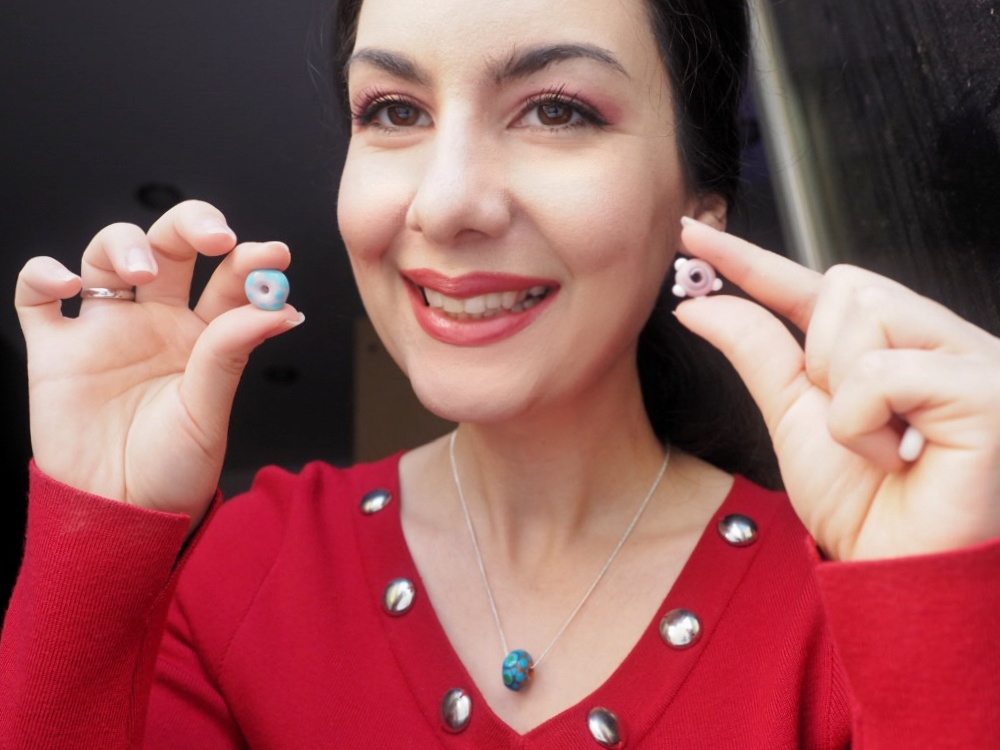
I learned how to create swirls in my bead as shown below.
After the bead is taken off the flame, it is immediately plunged downwards into a coal-like substance called vermiculite to allow them to cool gradually and avoid cracking.
After a couple of days, we released the beads from the mandrel and polished them from inside with water.
Now, it was time to take the beads home!
This workshop was three hours long and I got an extra two hours on another day to fully complete the learning experience. At the beginning, working with melted glass can be intimidating but once I learned how to handle and control the glass, it’s easy to get hooked and keep experimenting with the endless ways of making a bead. I had a great time!
My daughter also spent time in the other studio doing decoupage! 🙂 So we were both doing workshops alongside each other which was so much fun!
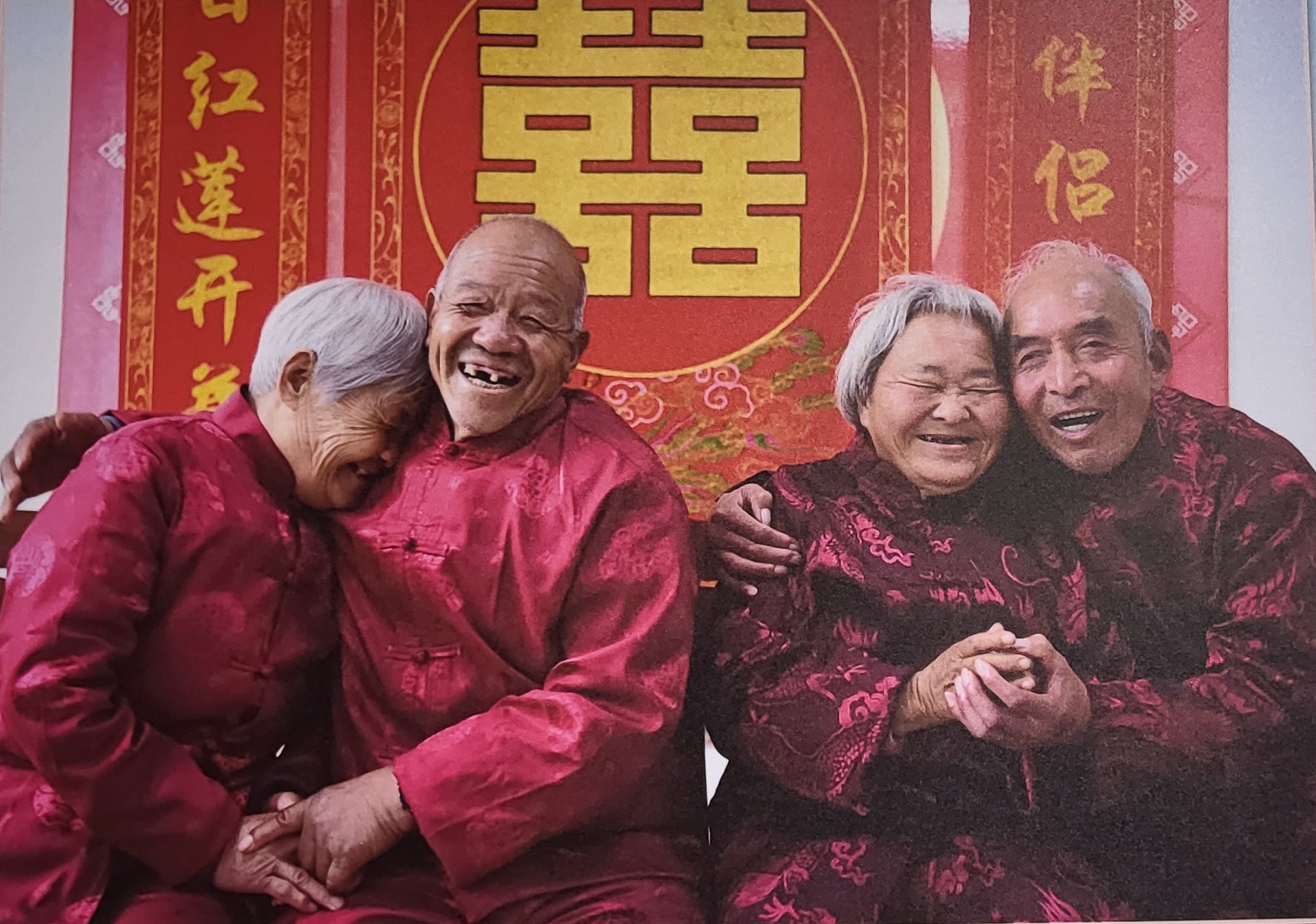
This Tuesday I decided to visit the Chinese Festival event over at the National Library of Kuwait located in Kuwait City.
The event was organised by the Embassy of China to showcase and celebrate the various cultural activities of the People’s Republic of China.
When I first arrived, there were a series of performances and traditional dances taking place.
Making beef dumplings
After the dance performance, I walked through the hallway showcasing various aspects of Chinese culture. Here, a chef was folding dumplings and handing them out to guests in tupperware to take back home and cook.
Chinese Tea being servedFruit carvingsChinese calligraphy
The calligraphy booth offered to write guests’ names in Hanzi 漢字, Chinese letters. The piece of handwritten paper was then given as a souvenir.
calligraphy tools
I then arrived at the food section which I looked forward to the most to be honest, as Chinese cuisine is one of my top favourite.
Cool decor on a serving platter
My plate
The food was authentic Chinese with ingredients brought all the way from China. As I waited in line for the servings, two Chinese men and a Chinese woman were in front of me enthused by their native food. I asked them about some of the dishes and they were kind enough to take me through the food as we moved along the queue together. One of the men served some cow’s feet on my plate and promised that I’d like it. The thinly sliced cow’s feet looked gelatinous and as I bit into it, the dish had a cartilage texture to it which I liked. It also had a pleasant garlicky taste of sweet and spicy.
I also got myself some chunks of duck meat, but passed on the heavily peppery beef nearby that was covered in red chilli! People around me were panting to relieve their inflamed mouthes. I do consider myself an adventurous eater and willing to try out new things. I found it interesting how most of the dishes are not the typical the Chinese cuisine we are accustomed to here in Kuwait like noodles, spring rolls and dumplings. The food at this event was on another level, bringing on dishes like Mantou (steamed buns decorated with Chinese dates called jujube), small steamed fish and Mapo tofu to name a few.
Before leaving, guests received giveaways from the embassy.
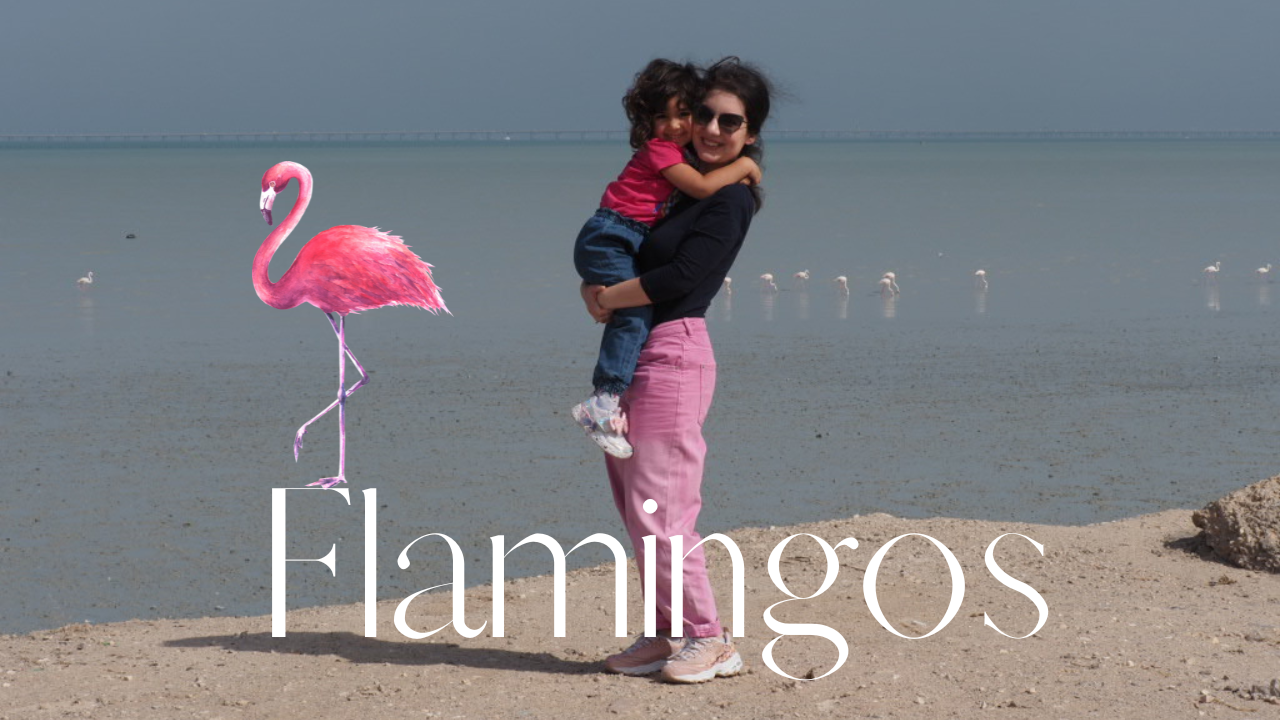
Over the weekend, we decided to look for flamingos in Kuwait. Since winter is approaching, there are lots of exciting outdoor things to do now.
Flamingos migrate to Kuwait starting early Fall and stay until Spring, so it was the perfect time to see them.
We drove to the Sulaibikhat area where they are most commonly spotted. Once we arrived, we couldn’t see any and I was squinting trying to catch sight of them. I saw what looked white specks from afar. We used our daughter’s binoculars to zoom into the sea and there they were! It was so exciting to locate them.
There was a way to drive closer to them over empty sand lots and bumpy paved pathways until we reached a small cliff overlooking them with a better view.
The flamingos were moving in flocks along the sea further and further away along the shore. The higher the tide, the closer they are to the coastline. The high tide that day was at 6.30am, and we arrived at 10am which meant the tide had already receded a little but not completely. The low tide had started at 1pm that day and then high again at 9pm.
It is important to check what timings the tides start as each day is different.
Arriving super early when the tide is high is favourable as the flamingos will be in close proximity, however, since we arrived at 10am we could still see them fairly near.
Here, I used a zoom camera lens to take the photo.
I’ve admitted it before, but I have a major affinity with stationary. If I were to splurge, it would be on office and crafts supplies, cute notebooks, stickers, pens and so on!
I decided to take a couple of trips to some of Kuwait’s stationary supply shops, both bigger and more well-known ones to old stationers tucked away in various areas.
This post is about Al-Eshraaf Co. store located in Fahaheel. As expected, it occupied a place surrounded by shabby and rundown buildings, shops and restaurants. But for some reason, sometimes it’s these kind of vicinities that reveal interesting things.
Al-Eshraaf Co. Stationary Shop
The store consists of two floors. This is the basement with crafts items. Funny mustache stickersThe catchphrase…!Back when phons calls were useful and a novelty.
There were a lot of outdated book selections from the 90’s to early 2000’s, which I found fun to look through as they reflected the importance and novelty of certain things in their time.
A cute poster!
Another catchphrase on the packaging.
A giant replica of the oral cavity
Human anatomy foam puzzleLarge foam balls for arts and craftsVariety of gift boxes
If you’re looking for a pretty nice place for arts and crafts supplies, this stationary shop is a good choice!
Our very first trip with our two year old daughter was to Turkey back in November of 2021.
The reason why we opted for Turkey is because we wanted somewhere close that had the best of both worlds – part Europe and part Asia. As a first-time experience, we sought to test the waters with our daughter’s introduction to travel and learn from it before we moved on to more adventurous and longer trips that were further away.
Staying occupied in the plane with a doodle mat.
The Flight Experience
The flight was some three hours long from Kuwait to Istanbul. We kept our girl busy with snacks, drawing activities, some videos on our phones as well as books. But it wasn’t long before our daughter got bored and wanted to walk on the aisle, which she did, and had more fun socialising with the passengers than all the activities we brought for her altogether. It’s no wonder, really, as this was her first time on an airplane and all she wanted to do was explore it!
Our Stay
We based ourselves in the center of Istanbul right at Taksim Square in a local boutique hotel.
Hotel view
The moment we stepped off the taxi and rolled our luggage and stroller along the cobbled pathways, Istanbul’s signature grilled aroma of meats filled the air.
Every corner, small restaurants and eateries advertised staple meals of kebab, alongside french fries and grilled vegetables on the side.
Turkish rug footwear (yes, they’re made from Turkish rugs!)
A common street snack – roasted chestnuts, especially during cold weather. So cozy!
That Night
It was already sunset and we unpacked/relaxed in the hotel before heading out for a little nighttime stroll and a dinner grab.
The streets of Taksim Square
I liked the aesthetic of this street view. A backdrop of residential buildings and calm laundry hangings, coupled with a glowing neon center from a lights shop.
As we walked the streets of Taksim, it was hectic, lively, and colourful. I loved the food street vendors in particular, who displayed fresh vegetables, fresh shellfish, and roasted chestnuts all the while we dodged pedestrians and passed locals chatting over Turkish coffee and dining. It isn’t the best area to be for a toddler, but the sensory experience was everything with so much happening in every corner. It can be quite overwhelming.
Trying some dinner
Food in Turkey
We were so hungry after our trip, that we decided to have some food at the first decent-looking restaurant we saw. Mayoosha, our daughter, had some chicken in tomato sauce on a cast iron dish with mashed potatoes on the side, while my husband and I got some grills. We all enjoyed Aryan laban – it was pretty much our go-to drink during the entire trip.
Mayoosha wasn’t accustomed to other food apart from homemade meals, so we struggled at first when it came to finding the right food for her that would make her feel comfortable. Even if something was somewhat close to what she ate at home, it wasn’t the food her mama or grandmother were cooking ^_^
Moreover, Turkish food mainly revolves around grilled meats and this can be too salty for a child. However, there are a couple of nice broths and soups to have as well. There was a lovely family eatery next to our hotel that made delicious, hearty lamb soup with bread ( I honestly don’t recall the name of the place). I would order this soup for Mayoosha and I a couple of times and my husband would bring it to the hotel room for us to eat for dinner on a cold night. It was quite nice!
Early in the morning we’d find bakers leaving their freshly-baked bread of the day at Kebap shops.
More photos capturing the street shops of Taksim Square
The Next Day
The next day , we had a lovely Turkish breakfast spread at the hotel’s outdoor garden. The garden was lovely and Mayoosha loved spending time there, especially with the feline visitors!
A typical Turkish breakfast would include different white cheeses with olives, a variety of dips such honey, scrambled egg, and Turkish Sucuk sausages with some fresh bread.
A Walk Around Istanbul
Since Istanbul is huge, we took taxi rides to places here and there and sometimes went on foot. The weather was chilly and rainy at times.
Loved this sculpture at a church’s courtyard by Turkish sculpture artist, Ayla Turan
Playgrounds and Parks
Our trip was very much toddler-oriented as we wanted this trip to be as comfortable as possible for Mayoosha. We dedicated a lot of our itineraries to beautiful parks, which meant Mayoosha could feel more herself and ‘at home’. The key to traveling with two year olds is to stick to places that are familiar to them as well.
A lovely and safe park at Ortakoy along the Bosphorus coastline.
Emirgan Park is gorgeous. It is inside a forested area. In spring, the park is covered in tulips and beds of flowers.
Emigran Park
Emigran park is one of the most gorgeous parks I’ve ever seen to be honest. I loved how it’s located at the shores of the Bosphorus, so as you descend the park’s pathways you have an open view of the sea on your side which is uncommon.
Mayoosha’s dream place ^_^
Trip to Sapanca
Sapanca soap
We decided to visit Sapanca, the rural side of Turkey in close proximity to Istanbul consisting of various villages around forested areas.
Bread-making at a restaurant in Sapanca. The Turks make delicious bread!
A little corner shop we encountered in Sapanca, selling village items.
The area we visited in Sapanca is known as Naturkoy in Sakarya.
We had lunch at this restaurant.
Manti dish in yoghurt. Manti are little meat-filled dumplings commonly eaten in Turkey.
And of course, we have the staple meat dish. No matter where we ate, the meat was always good.
The surrounding view from the restaurant.
Lake Sapanca. Loved walking around the lake during golden hour. It was very peaceful.
Kitty greetings!
On the way to Sapanca, we had also stopped by this horse-riding place. Our daughter enjoyed riding a pony for the first time!
The Zoo – Faruk Yalcin Zoo
What’s a toddler’s trip to a country without a visit to their zoo? ^_^
Eighty-five hectares in size. Volcji Potok is a stunning public garden of various species of trees, flowers and plants around the world as well as plant “nurseries”. The garden is located in Slovenia – the third most forested country in Europe.
Even though we frequent Slovenia (aka former Yugaslavia), this was my first time stepping into this vast botanical garden. I felt I was in a mythical fantasy scene in Zelda, due in part to the park’s magnificent, towering trees of all kinds and pristine plains where one can run through freely with arms wide open.
Very cool real-size models of humpback whales
The garden is incredibly lush and it was a slow day, so there was absolutely no rush walking – which is how it is meant to be enjoyed. The parks are inspired by both English and French styled gardens.
There is a wonderful playground for kids, and I loved how it all intertwined into the surrounding nature. There are treehouses with slides, mazes that lead to a wooden tower, lakes with ducklings and catfish, a dinosaur area and other fun, giant real-life sized models of animals such as whales that were integrated interestingly into the landscape.
As we walked along the gravel trails, I was in awe of the beautiful trees – all individually labeled with their Latin names. There was one tree that rung a bell and it was the Gingko Biloba tree. This is one of the oldest living tree species in the world. It comes from an ancient group of trees that date back to before dinosaurs roamed the Earth. We’re talking a tree that has survived millions of years, it’s literally a living fossil! The tree is used for a range of medicinal purposes as well.
Tree hugger!
In April, the tulips were in bloom. In June, we were lucky to see the fully bloomed rose garden in the botanical garden. We spent time admiring all of the different kinds of roses and I felt like I was in an enchanting ancient Roman garden or one from a 19th century period. I loved how each rose had it’s own sweet distinct scent giving ode to meadows, honey and fruit. We had to be sure we weren’t sniffing into a flower with a busy bee though! My daughter ran enthusiastically from rose bush to rose bush taking in a whiff of their fragrances.
We also passed by a pond with catfish. It was funny how they swarmed towards us with their hungry gaping mouths surfacing from the water.
Hungry catfish
The area is so peaceful and wooded that it has meditation spots.
This was one of the most gorgeous pine trees I have ever seen. The photo doesn’t do justice to its scale and beauty. It was incredibly tall, and literally looked like a tree from Lord of the Rings.
Ripe pinecones are a common sighting, but finding unripe ones fallen on the ground such as these are out of the ordinary.
Ding, ding, ding!
That wraps up our visit to the garden. It’s one of those places that can be treated like a day trip, as you can spend hours wandering it’s path and trails. Mind you, we arrived in the early morning and left by around 5pm and still didn’t cover the entire area!
You can read more about my past trips to Slovenia here 🙂
I recently took my daughter, Mayoosha, to another trip to Aquamarine Exotic Farm in Kuwait. Since opening, they moved beyond just being an aqua-scaping / aquarium supplies shop to introducing interactive activities such as Koi fish-feeding as well as an exotic animal corner called “Aqua Kids”.
During our first visit, we visited the section through which you could get up close with the animals alongside a tour guide. Some of the animals were hedgehogs, starfish, and lizards to name a few. For a fee, the tour guide takes you around with some trivia and an opportunity to hold or pet the animals. It’s a really fun experience and the first of it’s kind in Kuwait as I am not aware of any place that allows one to get in close range to various wild animals this way.
The tour guide team
Months later in May, we visited Aquamarine Exotic again and the animal section was closed off for a birthday party. Apparently, they now offer kids birthday packages too.
I approached one of the guys working there to inquire about the animal section, to which he said that there’s now an entirely new building right next door that houses them. Named Safari Adventure, the newly constructed premises had already been open for a few months. We got really excited, so my daughter and I hurried over there to get our tickets.
*Tickets start from 5KD, but reduce to 2-2.5KD for children 2 years and below as well as nannies*
After getting our tickets at the booth, we were asked to wait in the lounge area inside. The waiting area itself has a cotton candy vending machine too…
Our Safari Adventure Experience
After a few minutes, we entered Safari Adventure. The tour is divided into Rainforest, Desert and Aqua animals.
Upon arrival we were greeted by a crow bird perched on the gate. It was free-flying around the place and the tour guide asked me if I wanted him to sit on my shoulder to which I agreed. I fell in love with crows even more after this encounter and they are officially my second favourite birds now after owls.
Crows or ravens tend to be perceived as these sinister creatures in horror movies and nuisances but as you probably know there is growing research that prove they’re intelligent and even possesses humanlike problem-solving skills. Crows are also very social and warm up to humans. The crow we met at Aquamarine Exotic was super cuddly and friendly, almost exhibiting a kind of personality to him.
Crow and I.
Rainforest Animals Section
The first area we were introduced to was the Rainforest section and the meerkats– also known as “Timon” from the Lion King. I always assumed they’d be somewhat friendly but they’re actually one of the animals we weren’t allowed to approach. Coming from South Africa, they are approachable up to 6 months of age after which they turn into aggressive “pitbulls” and perceive any visitors as intruders. At the time, they were all bundled up together taking their nap which looked deceivingly cute.
Next were the Lemurs of Madagascar. There were about six of them in a glass enclosure, energetically leaping and prancing around. The tour guide told us it would be okay to enter the cage and give these monkeys a snack, but warned us that prolonged presence will intimidate them. I passed this invitation and opted not to enter. The guide told us they were vaccinated against rabies, however they ARE known to have very sharp teeth and bite. It seemed that most of the animals there were friendly and trained to be comfortable with humans but you never know with their unpredictable nature. Overall, I felt safe.
My daughter admiring the lemurs
My daughter was afraid to approach most of the animals with the exception of the guinea pigs to which she said “because they’re soft!” And she’s right! Mayoosha enjoyed petting them.
We also saw the White Racoon Dogs, an animal I’ve never heard of before. At the time, they were tightly curled up and sleeping so we didn’t get a good look at them.
This is the White Raccoon Dog (image taken from Google)
The chameleon lizard was also amongst my favourite. We were allowed to gently pet it’s scaly body, but it wasn’t safe to hold due to having sharp claws. As I placed my hand on it, I saw it’s 360 vision camera lens-like eyes moving towards me fingers.
Chameleon
We also held some snails! Super slimy by cute nevertheless.
Desert owl from the Desert section
The Desert Area
The desert owl was also another cute small-sized camouflaged creature of the desert that we saw. It looked tiny and skinny due to it’s ‘concealment posture’, usually activated when the owl feels shy or afraid. The tour guide told us it was safe to pet it gently on the head only.
Other creatures included the iguana as well as other species of lizards.
Birds and Parrots Area
To get to the Aqua section, we passed through a large cage with small parrots flying everywhere. We had purchased a cup of food for them at the booth when getting tickets so this was the time we could enter and feed them.
The tour guide told me that the birds will be coming at me once they saw the food in my hand which kind of freaked me out. They were sitting all over me at that point and the tour guide made my anxiety worse by telling me that I had to keep the food steady otherwise they could get angry. I told her I wanted to get out as the flapping of wings all over me started to make me uncomfortable (my daughter was also watching mommy get ‘attacked’ and pecked by birds lol and was clearly worried). To anyone with ornithophobia (legitimate fear of birds, I wouldn’t recommend this!).
We also passed through the Aqua section with clownfish, starfish and other small marine fish before leaving. We took one final visit to the crow to say goodbye!
Since this was a spontaneous visit, I didn’t have my professional camera with me as I would had taken more photos. Even if I did, that first time experience was everything and we were too busy being captivated by the animals and learning about them.
Overall, it was lots of fun and something unique to do in Kuwait. We will definitely give this place another visit after a couple of months, especially once my daughter turns three this year and will enjoy the experience all over again!
For more information on this entire experience you can visit Aquamarine Exotic Farm’s Instagram and Facebook.
*For a recap/preview of my entire experience in bite-sized information, you can view my web stories here.
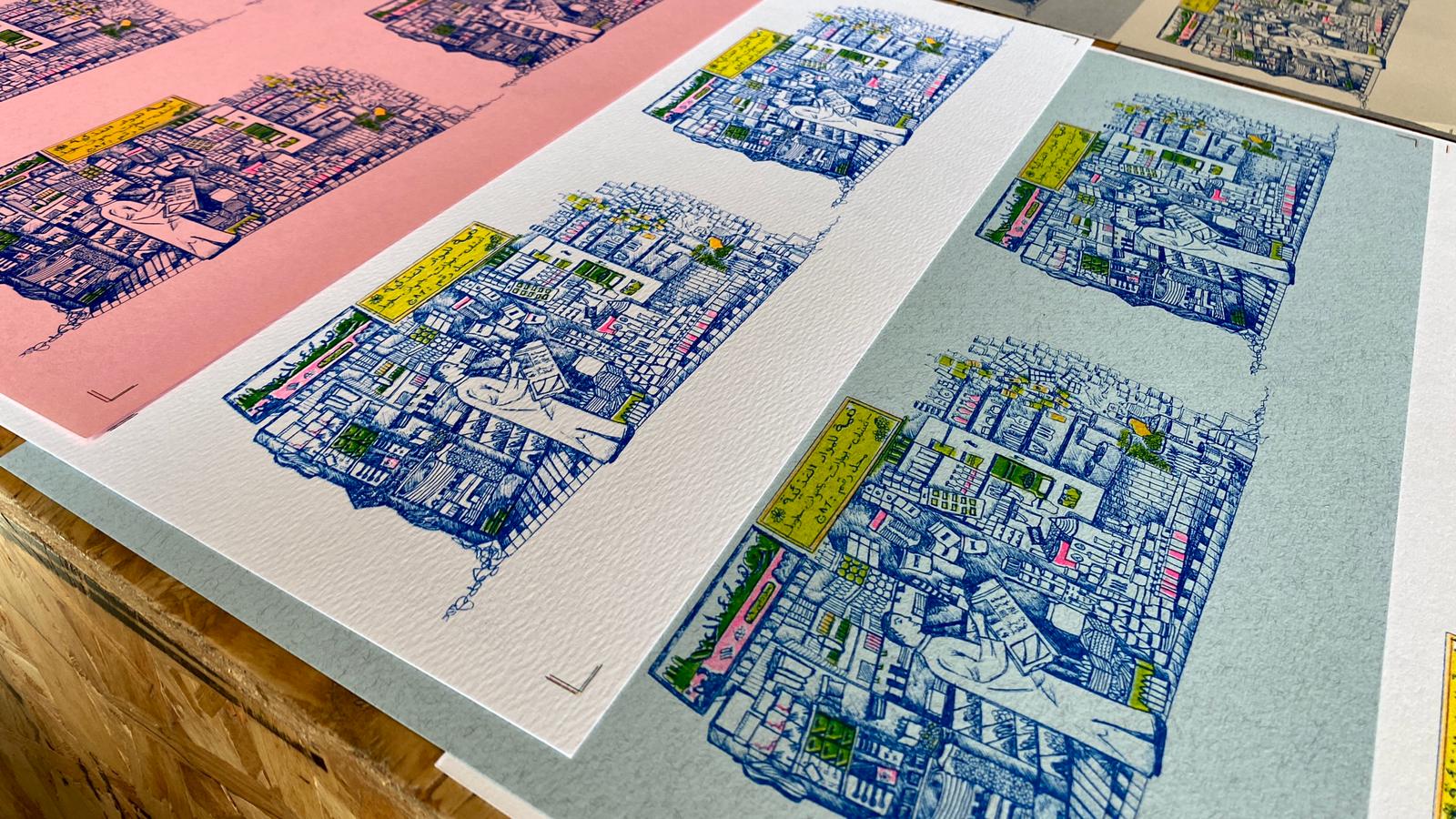
I began taking up sketch art during the first lockdown announcement when the pandemic started (March, 2020, Kuwait – to be exact). The more I drew, the more I learned about my artwork. It was as though with every sketch, I realized what the potential could be and how I wanted my sketches to look like. With time, I discovered a style I wanted to upkeep and I knew exactly what themes I enjoyed most – drawing mundane objects, shops, little houses, cozy corners, scenes I felt were nostalgic or emanated a certain mood. Then I started to include a little bit of people in my sketches too to add character. It wasn’t long before I also discovered Risography!
I’ve been seeking to print my artwork Riso-style, which conveys a unique, vibrant, and retro aesthetic. I looked abroad for Riso print rooms online until out of the blue I stumbled upon a risography studio in Kuwait called WarshaGraph. The studio had just opened and it was only beginning to settle. I contacted the people behind the studio and they offered to give me an advanced workshop plus a tour of the place, which sounded great!
The workshop is located in one of the towers of Kuwait City, which meant I had to meander my way (walking) from my parking spot to find the office located on the 32nd floor. It was an adventure, though!
The Risography guide, Romain Danger, greeted me outside the building and we ascended to the office floor.
First look at the studio with artwork samples
Danger showed me a tour of the area starting with some of their first sample prints. We talked about risography and got to know each other’s work. Then there it was – the RISO Printer. The printer looks like a big scanner/photocopier you’d find in an office and its primary function served as just that – a photocopier in 80’s Tokyo, Japan. It was designed to photocopy paper in high volumes because it was convenient, affordable and quick.
The Riso Printer!
The printer holds two color drums at a time, which need to be replaced depending on which colors you’d like on your print.
The RISO printer prints one color at a time
Preparing artwork for the printer can be quite tricky and technical, but that shouldn’t get in the way if you are truly passionate about this form of printing and would love to see the glorious effects of it on your artwork.
There’s a technical way to prepare artwork for print as well as a manual method. The technical one requires that you scan your artwork and upload it on the computer. The colors in the artwork would then need to be separated using photoshop or illustrator and then saved independently in grayscale PDF for each color that’s going to be printed. The RISO machine only recognizes a monochromatic format. One-hundred percent black in each color layer, will print out as 100% of whichever color you are printing. Ninety percent black will print as 90% and so on, hence various shades of black to white.
Each ink/color layer is printed individually (so that means the paper is passed through the printer several times). That’s why it is crucial to separate digital files for each colour you’ll be using. The title of each file should be the name of the ink colour such as greyscale fluorescent pink, for instance.
We also used a color chart to visualize the colors and how they mix in a RISO printer.
Now let’s move on to the less technical process 🙂
Manually preparing print for the risography machine
With the manual way, it’s the exact concept. You draw with layers in mind. Each ink color used is printed layer by layer, therefore you start your drawing on paper using any shade of black and then layer it with transparent paper on top to add another shade. Each shade will be a color depending on the intensity.
Separating the colors digitally
Manual art preparation for RISO printing
When it was time to print, the second step was to choose a catalogue of lovely papers of different colors, textures, and weights. .
Choosing paper!
What makes Risography beautiful?
The RISO machine is also eco-friendly and uses soy-based ink which produces unique outcomes. As Riso inks are semi-transparent, you can overlay them to create new shades and interesting effects. The beauty of Risography is you can expect unexpected results and more often than not, they look beautiful.
Prints sometimes contain imperfections but that is the beauty of these little flaws because in the end, it looks like a ‘handcraft’ print. I’m curious to print some of my photographs as well as I imagine they would look very 80’s magazine-like.
FIRST PRINT!
Because riso-printing is used mostly for digital artworks by graphic designers, seeing a hand drawn RISO print was something different and produced amazing effects. I was mind blown by the details that were captured since most of my drawings tend to be elaborate.
The details captured on my print!Printed on various paper. Super interesting to see the differences!
Seeing my artwork printed was exciting!
The fluorescent pink in RISO prints glow in the dark! How cool!
And that’s that! I will be back to complete my workshop (part 2) soon and trying the “manual” drawing method this time which should be fun!