Another adventure awaited in Osaka City, characterized by it’s infinite places to eat! For this very reason, it’s widely known as the nation’s kitchen! Osakans pride themselves in their food. So this was a place we were ready to eat ’til we dropped as the stimulating sights and smells of unrecognizable treats surrounded us everywhere we went.
First Stop…
The Museum of Housing and Living
Experiencing Osaka 200 years ago…
An old traditional Japanese home
This was one of my favorite places in Osaka because it felt like we walked into history. The museum houses a real-life scale of an Edo period street scene, complete with 1850’s shops and people. The best part was that you could walk into different doors with an activity taking place, be it a puppet show, traditional game, doll shop or workshop of some kind.
Shadow Games
After trying my chances at the “Spin the Roulette” and winning, I was offered a box of cute toys to choose from 🙂
Weaving through the small corridors of this replica town and entering amazing make-believe homes to sample experiences of the past was light-heartening.
Moving further along the museum, there are glass-enclosed detailed models depicting the urban development of Osaka and its housing districts. Some models also displayed old barber shops and scenes of Osaka’s past, which stirs up feelings of nostalgia.
A moving display of a district in Osaka that transitions
from day to night
A model of an old Japanese barber shop
Japanese masks used for theatre, festivals and rituals. Some are
legendary creatures of Japanese folklore
A display of Japanese dolls and old traditional toys
Osaka food!
When the mouth is lonely…(a saying in Osaka)
Osaka is filled with hidden eateries, bustling high-end dining scenes and street vendors. There was overwhelmingly so much to sample! One place that is well-known for this is the neon-lit Dotonbori district where we tasted the two famous Osaka dishes; Okonomiyaki and Takoyaki balls.
The making of Takoyaki Balls
These delicate melt-in-your-mouth battered orbs of minced octopus with pickled ginger and onion are simply delicious. Fresh off the griddle, they are meant to be eaten hot and gulped down at lightning speed because of how soft, crispy and savory they are!
Another signature dish is the Okonomiyaki, which is actually a Japanese version of the pancake that is pan-fried in batter with cabbage as the base and then topped with vegetables, meat or seafood. Usually the restaurants that serve these have a “grill it yourself” concept. They are equipped with an iron griddle on each table with a bowl of batter and some preferred ingredients which are then mixed together and dipped into the hot griddle and finally coated in toppings of choice.
Osaka lady selling signature Mochi sweets
Dotonbori Street
The famous Glico-Man. The icon of Osaka
Known for nightlife and entertainment, Dotonbori is a famous strip of restaurants and shops along the banks of its canal.
The highlight was Ebisu-Bashi bridge that overlooks the Glico Man, depicting a running sportsman in white gym clothes reminiscent of Japanese retro pop art. Lines of people stood on one side of the canal with their cameras for that perfect angle, holding their hands up, mimicking the sign. For years, this famous character popped up in my searches of Japan but I never took the time to understand the meaning and history of this symbolic billboard. Then I found out that Glico is the same company that makes one of my favorite snacks – Pocky! The packaging actually has the brand’s name on the corner of the box. What a connection! Glico started off in the 1919’s selling it’s first caramel sweets. The campaign for their caramels gave rise to the running man logo. Apparently, a selling point for their sweets was that they were only 15 kilo calories, which was the energy required to run 300m!
Further ahead the foodie strip, there’s a giant mechanical crab which obviously specializes in crab. This specialty is particularly savored during the winter times and is an extremely popular restaurant and go-to place to taste the flavors of sweet, soft crab meat.
The Osaka Kaiyukan Aquarium
I love visiting aquariums. So visiting the largest one in Japan was so exciting!
The marine creatures featured here are exclusively inhabitants of the Pacific Ocean’s “Ring of Fire”; the area surrounding the ocean in which most of the our earth’s volcanic eruptions and earthquakes occur. We got a beautiful glimpse into life deep within the Pacific Ocean, which was an eye-opening experience and pretty otherworldly I must say.
This form of "galactic" jelly fish is out of this world!
There was an impressive array of animals and I could spend an entire day just marveling at all those aquatic creatures, every time catching sight of a new and unusual one.
When we reached the central largest tank, it was teeming with marine life. From gigantic manta rays, sharks, fish sized bigger than me, and the star attraction of them all is the humongous whale shark.
One of my favorite was also the Spider King Crab display. I was awe-struck at the sheer size of them!
That monster!
Hi there little one!
Woah!
The Tempozan Ferris wheel
Located directly nearby the aquarium is the Tempozan Ferris wheel, around which many street performances take place.
Back to the hotel
Some sights around our area
A quick dinner in a classic Japanese restaurant
Osaka National Museum of Art
Right near by our hotel, we also discovered Osaka’s National Museum of Art. The next morning we walked there on foot. The eye-catching museum, whose architecture resembles an exoskeleton, focuses on contemporary art and hosts a variety of strange exhibits showcasing odd and minimalistic installations, performances, video art, paintings that explore various concepts and interpretations that challenge your thinking. Although pleasing and gripping to look at, I couldn’t make much sense of most of what was being displayed. However, it got me thinking, that it wasn’t so much about understanding what I was looking as much as what the object on display made me feel and that was the beauty of art.
The museum didn’t allow any photos to be taken, as I was quickly spotted whipping out my camera only to be warned by a supervisor. As we observed the various works of art, we passed a lady working at the museum. She was standing up against a wall when suddenly turns around to face it and starts to chant, in an opera-like rhythm, a verse of some kind in Japanese. This would go on for about 3 minutes and then she’d pause and turn back around and continue the same cycle every 30 minutes or so. I am not sure what this performance meant but it did look very creepy.
An interesting excerpt at the entrance of the museum
The legendary Osaka Castle
Osaka Castle looking cinematic
Surrounded by the beautiful Osaka Castle Park, Osaka Castle is one of those famous landmarks that come to mind when one thinks of Japan. Although it had undergone many reconstructions since 1615, it is still an impressive historic sight that looks like an ancient splendor. Places and stories of historical heritage always give me chills! It was first built in the 1500’s by Samurai and warrior, Toyotomi Hideyoshi, who was also known to have financed the constructions and restorations of many of the temples that stand today in Kyoto.
We thoroughly enjoyed strolling the grounds of the area with beautiful landscaped gardens of blooming Sakura trees. It was an extremely pleasant and breathtaking place.
Crossing over a bridge, we entered the castle’s walls. The castle, which now houses a museum of historic artifacts, had a huge queue. Once we gained access, we found that it was extremely crowded, almost to the point that we couldn’t take the time to enjoy the experience but rather skimmed through each floor and left. However, the peaceful walk through the park that followed was wonderful.
Universal Studios
Our last destination in Osaka was Universal Studios. I had already visited the one in Singapore, so I was eager to explore the Japanese version. We didn’t hop on that many thriller rides, in fact we mostly went to 4-D cinemas such as Sailor Moon and other anime-inspired attractions.
There was also a hyper-realistic Wizard’s World of Harry Potter™ which is vastly popular with the Japanese.
Universal Studios had an unusually strong obsession for the minions
too!
So my Japanese series concludes here, and I truly had an amazing time in Japan. Writing this blog was a trip itself. It took me back to all the cherished memories, encounters and experiences that I will look back on with a big smile.
You can read personal accounts of my trips to Kyoto here and Tokyo here!
After an interesting and serene ride on the bullet train with the sight of traditional Japanese homes shrouded in snow, we entered Japan’s capital of rich history and the birthplace of cultural traditions – Kyoto.
Abound with temples, shrines and relics of the past in enchanting forests, Kyoto is like a timeless old district reflecting traditional and classic Japan. It is synonymous with cherry blossoms, geishas, temples, traditional ryokan inns and masters of tea ceremonies.
After an energetic and frenzied time in Tokyo, we transitioned to a more calming vibe. Kyoto is indeed vastly different from Tokyo and I did sense two completely varied rhythms of life. Tokyo is electric and buzzing whereas Kyoto is serene and laid back.
Almost everywhere we went, temples, temples and more temples reminded us of the country’s rich history. These places are tranquil and historic with well-preserved heritage. This is not to say it’s all about tradition, as Kyoto also effortlessly embraces the modern side of Japan with its contemporary design and high-rise buildings.
Kyoto’s temples: The sounds of chanting and gongs
The iconic Fushimi Inari Shrine
The sacred shrine receives thousands of visitors wishing for success, good luck, and good health. Known for it’s tunnel of meditative vermilion-lacquered structures made of wood, the “torii” gates meander through the hillside forest up to the Inari Mount. Dotted throughout the shrine are Shinto gods which come in the form of fox statues called “Kitsune”, deities that represent rice, agriculture, and sake (Japanese rice wine). In general, the practice of Shinto venerates natural phenomena such as animals, rain, wind, rivers or mountains which are all referred to as “Kami”. In Japan, those who pass away are said to become “Kami” and are revered by their families.
Walking the pilgrimage route of the orange “tori” structures, we were lead up the mountain for a panoramic view of Kyoto. The place was very atmospheric in the rain when we were there.
As we passed through the tori gates, crowds after crowds shuffled in and out along the wide pathways, leading up to the temple beyond.
My husband and I ventured deeper and deeper in to the forest. Several trails diverted from the main one so eventually we found ourselves in a quite place surrounded by beautiful tall bamboo trees and small worship temples ahead. The whole experience was a wonderful hike and when we finally reached the top there was a sense of wonder and an air of calmness and tranquility.
Kyoto streetfood (Yatai)
On the way out, there were so many street food vendors filled with grilled wagyu skewers, rice cakes, matcha ice-cream, and other delicious bites!
Crab sticks
This was one delicious Japanese donut topped with a light and airy puff of whipped cream. These donuts are made of soy milk, they taste like Kyoto; natural and straightforward! Yuba is actually dried tofu curd.
Another Kyoto delicacy is the “Mitarashi Dango”. The first time we tried these was when we spotting a long queue at a street market. These are plain balls made of rice flour, coated with a glaze made of soy sauce and skewered onto sticks. They have a chewy texture and can be sweet or savory.
From Higashiyama to the Kiyomizu-dera Temple
A UNESCO World Heritage Site
We entered the historic neighborhood, Higashiyama district, leading up to the next temple. Evoking the look of old Tokyo, the street took us up a steep journey towards Kiyomizu-dera temple. Along the way, there are dozens upon dozens of shops selling Kyoto specials from snacks to handicrafts and souvenirs that we could spend hours exploring!
Once we reached the top at the temple, we admired the beautifully-landscaped Kyoto skyline with Cherry Blossom trees.
Seen from atop, people crowded under the Otowa Waterfall to take a sip of one of the three streams that are meant to have wish-granting powers in wisdom, love and longevity.
The Kiyomizu Pottery
As someone who loves ceramic art, I got to know that Kyoto is actually home to the craft. Kiyomizu was originally the name given to pottery made in the Kiyomezu area near the temple, but now the term Kyo-ware refers to all the potteries made in Kyoto. We entered an old Japanese pottery shop nearby the Kiyomizu Temple, and the owner was there with his granddaughter as well. When you see all kinds of cute handmade pottery, it’s hard to resist! From traditional and contemporary sake sets, decorative pottery, to rice bowls, after a long look around I got a mini ceramic tea cup ornament adorned with hearts and an owl-inspired incense burner. They were also beautifully-wrapped and packaged 🎁 by the elderly owner!
Japan’s Omiyage culture
Omiyage means Souvenir in Japanese, and they come in the form of colorfully-wrapped boxes. These are gifts you bring back to your family, friends and co-workers from Japan. The gifts inside are usually food and must always be locally- produced, therefore “Omiyage” doesn’t apply in other countries. There are many customs attached to the practice of omiyage gift-giving. I certainly loaded up on some Omiyage mementoes of my time in Japan!
Japan’s fine meal and old-world cuisine: Kaiseki
Known as Japan’s “Haute Cuisine”, Kaiseki is a rich traditionally choreographed 6-course set meal consisting of an appetizer with sake, a simmered dish, sashimi, a seasonal dish, a grilled course and an end meal served with rice. The entire meal concludes with dessert and a tea-ceremony. Usually, this experience is found in traditional Japanese “Ryokan inns” offering an immersive Japanese cultural experience complete with Japanese hospitality. It’s the perfect place to spend the night as one gets to see, touch, taste and feel Japanese culture. In most Ryokans, there are surrounding hot springs called “Onsens” for bathing and absorbing the rich therapeutic minerals naturally found in them, infusing the entire place with the Japanese philosophy of Zen. With our fast-paced and complex lifestyle, it’s normal that the past slowly fades into obscurity, however, this is a place where you can get away from it all and experience pure serenity in minimalist surroundings and old-school Japanese ambiance. This alluring charm of old Japan tucked away in picturesque valleys of evergreen forests entices the senses and adds a nostalgic flair.
One place that we didn’t get to visit was the Kibune Valley, which opens in the summer. Located on the Northern mountainous side of Kyoto, it consists of a dining terrace built over flowing water which sounds like a wonderful and calming place to be amidst Japan’s nature. We’ll save it for the next trip 🙂
The Golden Pavillion
An UNESCO World Heritage Site
The golden Buddhist temple shimmered brightly in the afternoon sun as we walked around the gardens with the temple in view. After an online search about the temple, we learned that the original was actually completely destroyed by a monk in the 50’s. It was shortly rebuilt a few years later and believed to be a faithful reconstruction to the previous one, although it is said to be covered in more gold leaf this time. As we walked around the ancient structure, I really did feel like I stepped back in time as there’s a deep history surrounding it’s existence that dates back to the 1400’s! It felt surreal imagining the thousands of people that walked these paths.
The Edo Tsumami Kanzashi
Exquisitely crafted Japanese hair ornaments
These are thin pieces of silk that are handwoven into flowers or bird formations and worn as hair accessories. In Kyoto, we found an old shop dedicated entirely to kanzashis and I must say, they are outstandingly expensive. Worn by geishas, the hair ornaments are made of kimono fabric and the ones we saw were considered the high-class versions. The shop itself had all kinds of items for hair, including Japanese hand carved wooden combs and Camelia oil traditionally used by Japanese women for centuries. As with Japan’s love for seasons, the Kanzashi are also tailored accordingly to feature sakura blossoms, plum flowers and many more seasonal flowers.
Gion District: Will we spot the Geisha?
The elusive geisha, a master of the Japanese Arts. Arriving at Gion, we were expecting to see geishas strolling the streets…but this wasn’t the case. A short taxi drive to the district and a small chat with the taxi driver taught us that Geishas are mostly likely to be spotted at 5pm in the evening when moving between their appointments. A geisha sighting wasn’t all that common after all.
Traditionally, geishas are meticulously trained to entertain, perform and converse at tea houses. Geisha culture is somewhat shrouded with mystery and intrigue and unfortunately we didn’t get to catch one this time!
The Romantic Sagano
En route to the Arashiyama Bamboo Forest we hopped onboard the Sagano, an old-fashioned open-air locomotive that took us through the scenic landscapes of Kyoto. The train winds its way through the mountains and rivers as one admires Kyoto’s unique nature!
The Arashiyama Bamboo Forest
The famously known bamboo grove or a.k.a the national geographic-like photo that we’ve all seen before, is a unique and dreamlike sight in reality with its sheer abundance of thick bamboo stalks that towered over us as we walked its serene paths. If there was another name for this captivating place it would be “Magical Forest”. The entire canopy illuminated in citrusy green. Strolling through, it was almost like mediative experience.
I had previously seen so many lush forests of pine trees in Europe, but a bamboo forest was something completely new to us and definitely a place worth remembering.
One amazing fact we learnt after our visit was that in 1996, the Japanese government and Ministry of Environment formed what is called “100 soundscapes of Japan”. This is a list of protected soundscapes all over Japan that aims to combat noise pollution. These sounds, which are deemed significantly meaningful in preserving sound environments, include a sound collection of of birds, trees, insects and other natural phenomena. The swaying tunes of Bamboo stalks at Arashiyama also make it to the list. All of these sounds are meant to be symbolic to the local Japanese culture as well.
Monkey Park
From Arashiyama, we were on our way to the top of the mountain to visit the unusual Monkey Park, your “typical” neighborhood park except that it’s home to 100 Macaque monkeys. The journey up is a steep walk to the peak but certainly a rewarding one. At first, the idea of free-roaming monkeys might sound intimidating. The first thoughts that ran through my mind were; is it safe? Are we really allowed to get close to them? How do the monkeys react to human presence? When we almost reached, a fun board of rules instructs visitors on how to stay safe around the monkeys. One of the funniest rules clearly instructed not to stare into the monkey’s eyes! Apparently, they see it as a threat.
As we huffed and puffed our way up the final trail, we could already spot the monkeys sitting high up on the trees. Even though they are probably accustomed to regular guests, they are still considered wild, untamed and potentially dangerous.
At first, we sat at the bench and observed the way others interacted with the monkeys. Some were attempting to riskily take that perfect selfie only to be hissed at by the primate. Others fed them with nuts and fruits from inside an enclosed hut rather than directly, which almost looked like the humans were caged and the monkeys were out in their natural habitat! A couple of visitors admired them from afar (like us).
It was fascinating to see how human-like they can be with their unique behaviors, playing with their babies or grooming their’s partner’s fur. As a nature and animal lover, there is nothing quite like seeing them in their natural state, unconfined. And I wasn’t as nervous anymore as it turned out the monkeys are pretty well-behaved!
In the same place, there was an observation deck with lovely views of Kyoto.
Kyoto Dolls
One aspect of Japan I was eager to come face with are the traditional Kyoto dolls which are often regarded to be of high artistic merit, handcrafted with traditional techniques passed down from generation to generation of artisans. They come in various forms, some as heroes and warriors, others as children, fairytales characters and even demons. They are so popular in Japanese culture that Kyoto has an annual doll festival to celebrate Girl’s Day.
There is one particular doll shop called the Ando Doll Shop that I had found on a map, a family-run century-old business that I was keen on visiting and is said to be home to the most exquisite dolls in Japan. So we took a taxi ride over there. I was hoping to purchase this craft as a souvenir, however they are extremely expensive and it’s no wonder as all of the pieces are ornately handcrafted and dressed in clothing from the ancient Heian period of Japan. We could feel the history around us in the shop. The lady working there was sweet enough to show us around the exquisite shop, decked out with numerous varieties of extremely beautiful dolls. I would have loved to get to know the meaning behind each one but there was a big language barrier. She did however, give us amazing postcards as a gift from the shop.
The Musha dolls as seen above, represent the warriors of Japan’s martial past. They are dressed in armor. Unlike the Hina dolls which are displayed in homes during Girl’s Day, the Musha dolls celebrate Boy’s Day. Every doll has it’s own occasion and are unique antiques and collectibles.
These are known as Hina dolls and their representation is tiered in hierarchy. The first level holds the Imperial dolls, followed by the Three-Court Ladies displayed in the photo, then musicians, helpers and finally the samurai.
Emperor and Samurai Dolls
The traditional Machiya Starbucks
For generations, artisans and merchants of Japan’s ancient capital Kyoto, lived in traditional townhouses called “Machiya”. Therefore Machiya houses were often shops or workshops and mostly found in the alleys of old districts.
Surprisingly, we experienced a Machiya House in an unexpected way. In a Starbucks coffee shop! The multinational “western” brand is located in a 100-year old two-story Japanese house. At first I thought to myself, am I I really going all the way to visit this historical city to admire the majestic century-old temples and shrines, only to find myself in just another Starbucks branch? However, this is a different one. It took as some time to find it as there’s no infamous Starbucks logo to signal it’s location. That’s how much it managed to blend so well into the historical area.
Opened in 2017, the Kyoto Starbucks pays homage to all the traditional Japanese elements, including wooden floors and walls with “noren” curtains. We lounged on tatami mats as we sipped on Sakura milk coffee. Definitely an unusual experience.
Candy Show Time in Kyoto Gion
The Candy Show shop isn’t a local one, however, there is an interesting candy-making show and lots of Kawaii candies that come in a variety of flavors.
Through an open glass display we watched up close how the confectioners kneaded the candy, eventually cutting it into pieces of cute patterns portraying Japanese characters and symbols. The whole process can be quite hypnotizing. Row and rows jars fill the store, from rainbow swirls, hearts, sakura flowers and more. The flavors are distinctly Japanese-inspired too. My favorite part was observing the range of colorful Japanese packaging that are great for gifts.
Japan, a place that has long governed my list of places to see and experience and I finally did! It was one of those dream destinations that was always on my mind. Dreaming of Tokyo, I often imagined neon streets, an energetic buzz that leaves you mesmerized, and the overall excitement of being in such an interesting new world to get lost in. It is everything that I imagined it to be; home to the fascinating, unusual, and bizarre. I noticed how the smallest and most everyday things are subtly different and Japanese in their own way! Overall, a visit to Tokyo most certainly implies a world of discoveries and stimuli for all the senses.
My first glance at Tokyo!
We landed in Japan during the winter times, and it was freezing cold. Once we arrived in Shiodome, Minato, a redeveloped district known for it’s modern architectural design, we let ourselves get a little lost on the way to our hotel and it was already a sensory overload for me.
I couldn’t wait to explore this treasure trove of encounters and experiences!
On the following morning, we explored the area and went into a small convenience store called “Family Mart” to grab something fun to eat (also known as a Konbini in Japanese).
There were all sorts of interesting-looking snacks, desserts, pastries and bento boxes – and all were labeled in Japanese so it was impossible to understand if only from a cute cartoon drawing on the package. The store had virtually everything you need, from thoughtfully packaged meals to sandwiches. And almost anything I picked up was delicious. We used the Google Translate Camera app to point at the packaging and it would give us a general idea of the content which was really helpful. However, the fun part was randomly picking up a variety of snacks and trying them out for surprise! These mini marts became one of my favorite stops throughout our trip and every time I walked into one I was wide-eyed at the variety of items to try.
Some snacks I tried were clam-flavored ramen and a kind of dried fish and seasoned calamari, and there was even kiri-flavored ice-cream! My favorite part of walking into any Japanese convenience store is their “Hot meal station” next to every cashier for a “grab & go” snack. The photo below shows some rice buns with different fillings and Tsukune, which are tender Japanese chicken meatball skewers glazed in delicious seasoning.
A Japanese convenience store with a variety of snacks
In every district, I have jotted down my main observations and initial encounters in the area.
Tokyo is divided into several districts, each with their own unique character and charm. Our very first district was Asakusa, where we visited the sacred grounds of the Sensoji Temple.
Getting around Tokyo
It is no doubt that Tokyo’s metro system will get you to many places, but it’s a labyrinth of subway lines. We got lost a few times before eventually getting the hang of it (thanks to my husband who mastered it like a BOSS! Without him I would get stranded 🙂
Japanese people
One aspect of Japan that I found striking is the sheer respect and politeness of Japanese people. From the courteous taxi drivers in their immaculately clean vehicles (with automatic doors that open and close!) to the humble department store workers and businessmen at the subway, I was quite shocked at the amount of genuine hospitality. There were many instances throughout our stay that reinforced this.
One great example was at the metro station, we were seemingly lost and attempting to find the correct subway line. Usually when that happened we would turn to a local for help. This time we approached a business man and he pointed us to line “8”. When we reached, we waited for the metro to arrive and after about 10 minutes we see the man running to our direction apologizing profusely that he was mistaken and the right line was “7”. The fact that he took the time and effort to come back and tell us this left me astonished! Another example was similar except that we asked help from a young college student. He whipped out his phone to search for answers and it really looked like he sincerely wanted to help us. He even missed his train!
I also remember another endearing instance when we were about to get some drinks from a vending machine and my husband accidentally dropped a pile of coins. Children nearby rushed to pick up the coins and give them to us. Where in the world do you see this act of politeness? Respect and etiquette are at the core of Japan and embedded in their culture.
Nostalgia in Japan?
One look at Japan’s traditional culture, technology, innovation and art made me realize that the Japanese actually strive for perfection in everything, which makes it such an orderly and organized nation. There is also an air of nostalgia that I couldn’t point my finger on. It could be the old-school Japan, and I guess I would say that a sense of nostalgia is even reflected in their manga, invoking a longing for the good old days.
ASAKUSA DISTRICT
Asakusa is known for the oldest Buddhist Temple in Tokyo dating back to 645 AD called Sensoji. The path leading to the temple is also one of Japan’s oldest shopping streets called Nakamise Dori. When in Japan, I wasn’t really looking into touristed-out typical travel trinkets. I was more on the lookout for rare Japanese finds, be it handicrafts or only-in-japan traditional souvenirs.
Toy Capsules (Gachapon in Japanese)
Another one of my favorite things to do was scout the toy capsule machines all around Tokyo, which are itself a cultural phenomenon. Believe it or not, each area has different editions with unique collectibles. Exploring the various miniature works of art in plastic such as capsuled mini food models, anime characters, keychains, and toys is a really fun experience and addicting in a way too. These were quite nostalgic for me because I remember my favorite childhood video game Shenmue where the lead character wondered the streets of Yokosuka, Japan, collecting toy capsules.
Opened one of my toy capsules to find 551 Horai, which is a popular Asian rice bun outlet.
A Japanese pickle store – Tsukemono
KIMONOS – THE TRADITIONAL GARMENT OF THE OLD EDO PERIOD
Kimono rental shops are pretty much everywhere, and it’s always good to consider wearing an authentic kimono as you stroll the old streets of the Edo period. The intricacies that go into wearing one and the rainbow of choices that come in different patterns and colors was interesting to observe. One fact I learned from the lady working at a kimono rental shop was that you can “Level-up” your kimono gear, depending on the pattern and fabric that range from basic kimonos to more elaborate ones worn by Geishas or wedding ceremonies. All in all, dressing up in a kimono is an art by itself.
Owls (Fukuro) everywhere
One of the things I noticed was Japan’s obsession with owls, just like myself. I learned that there is some significance and meaning to owls in Japanese culture. Most if not all Japanese souvenir shops had owl trinkets, charms and owl figures almost as popular as Hello Kitty. Owls actually symbolize luck in Japan, and the word “Fukuro” for owls means “Good luck or fortune”.
Each colored owl symbolizes luck, protection or fortune
Arriving at Asakusa’s Sensoji Temple
Japan’s ancient Buddhist Temple is called Senso-ji, considered to be a very spiritual place in Tokyo. It was crowded when we reached, and masses of people surrounded a cauldron producing a cloud of billowing incense smoke that visitors were wafting over themselves. People light up incense sticks and place them in the giant urn to make a wish before entering the temple ahead.
Also, before entering the temple there is a fountain of purity. The streams of water are meant to provide spiritual cleansing before moving forward.
Once in the temple, there are consistent rattling sounds coming from over the temple from people shaking metal containers with hopes of receiving a good fortune. I picked up a box as well and once satisfied with the shaking, I turned it over and a wooden stick came out of a small slit at the bottom. There were some characters written on it with which you have to match on the drawer in front of you. After spotting the correct drawer, I was lead to open it and receive my “Omikuji” (fortune). I deciphered it, and I turned out to get a good fortune! Normally, if you get a positive reading you take the fortune back home with you, if not, you tie it on to a “Omikuji tree” at the temple and leave it behind.
Japanese vending machines
The Japanese have a strong affair with vending machines, and its no wonder as they really are a source of fascination due to the variety of items sold in them. They are very convenient and handy too, dispensing a range of cold and hot beverages with the cutest and most colorful packaging. My husband and I would always stop at one to grab ourselves a nice warm drink, he always got the hot coffee while I had tea with milk.
The cutest bottle of water!
Back to Shiodome, Minato
Pachinko Arcades: Gambling?
A craze that I found in almost every corner were Japanese arcades known as “Pachinkos”. When we entered one, it looked like a form of gambling and the majority playing were middle-aged men in suits fixated on the screens of their machines which were blaring and making incessant noise. It almost seemed like they were oblivious to their surroundings and focusing solely on the game in front of them. I tried to understand what they were playing exactly, but all I could make out were flashy colors and random balls, it mostly resembled a pinball game. Honestly, I couldn’t stay in one for more than 3 minutes as the sounds were overwhelmingly loud and unpleasant. I guess when you’re so into the game you kind of block out the noise overtime.
White surgical masks: Protection or a long-standing trend?
You might always wonder why the majority of Japanese, especially from Tokyo, wear white masks like just another clothing garment and at first it may seem puzzling. In reality it is a social etiquette, either to block viruses or allergies or prevent yourself from spreading them to others. I also learnt from one Japanese that it helps battle the “hay fever” season caused by a specific Japanese cedar tree, therefore donning a mask helps alleviate the symptoms. However, I wouldn’t be surprised if masks are actually considered a fashion statement in Japan as there are all kinds of styles and colors sold everywhere.
Japanese Tea: A way of philosophy
Tea is a Japanese cultural activity and custom that involves a ceremonial preparation and presentation of the Japan’s favorite powdered “Matcha” green tea, and there’s a whole philosophy behind it that helps one enjoy their tea through a relaxing experience. It’s less about the drink and more about the appreciation of the nature and art of making the tea. When we entered an old tea shop, there were a wide variety of tea leaves with premium being the highest quality. The man working there offered to prepare a sample for us with his ceremony utensils, and the whole preparation looked like a form of mastery representing harmony, purity, serenity and respect.
The Imperial Palace
The Imperial Palace
The Imperial palace is set amidst beautiful traditional Japanese gardens and is the place where the Emperor of Japan resides. It was especially stunning during the season of Cherry Blossoms which we were very luck to witness! The entire grounds gave us a feel of ancient legacy.
The Enchanting Sakura: Shades of Pink
It’s a lovely sight to witness when gardens and parks are blanketed with blossoms of pale pink, baby pink, and deep pink hues. This is when we knew it was the onset of Spring in Japan. The Imperial Palace was amongst the best spots for cherry-blossom-viewing. I hadn’t known prior to traveling to Japan, that there is more than one type of Sakura tree. There are actually over 600. It was certainly a dream come true to be walking amidst their magical beauty and a great memory I’ll cherish!
A type of “Yellow Sakura”
Cherry blossoms are so iconic and loved all over the world, that the Japanese have an entire word for “looking at flowers” which is called “Hanami”. There are several “Hanami spots” throughout Japan to admire the blossoms.
Hanami picnics – an ancient tradition and national pasttime
Sakura flavored treats are also very common, with sakura flavored Starbucks Pink Milk Lattes to sakura-layered white chocolate Mille Feuille and Sakura-infused tea.
Ginza District
Ginza is known as Shopping Heaven. You can find everything from high-end luxury brands for men’s and women’s fashion in multi-storied designer buildings to traditional Japanese goods ranging from stationary stores to expensive Japanese pottery shops.
Cutting-edge galleries
Tokyo in general has a lively art scene, but in Ginza in particular there are a variety of arts, antiques, and crafts for display in galleries which make for great spots for inspiration.
Japanese glazed porcelain dolls
The art of Japanese dolls
Japanese Stationary: The 100-year stationary store
If there’s another thing that Japan and I have in common, it’s our passion for stationary! In this digital age, I still go nostalgic for beautiful artful greeting cards and postcards. In Japan, there’s an entire century-old stationary store devoted just to stationary goods called Itoya. And of course, I went wild.
With over 7 floors, you can find your ideal ballpoint pen, make your very own customized notebook through a color, texture & thickness chart, home care goods, Japanese colored paper art works, and a whole floor dedicated to postcards, greeting cards and stickers. The stationary looks so cute, I wanted to get everything. Aside from the cuteness, Japanese stationary puts quality, design and functionality at the forefront.
A greeting card portraying the famous Sagano Railway in Japan.
The original Sheseido Cosmetics Building
Sheseido is huge in the beauty industry, and it’s personally one of my favorite Japanese cosmetic brands. That’s why spotting Ginza’s original Sheseido building of 9 floors got me excited! Starting with make up on the first floor followed by skincare on the second where I received a personalized beauty diagnostic. They have several stations devoted to various skincare needs, from anti-aging, moisturizing, serums and more. I also stopped by 2 more floors which had a hairdresser and photo make up studio. I stocked up on a lot of exclusive Japanese Sheseido make up and skincare after spending hours exploring their items which was a delightful experience 🙂
Only a street away is an another entire building dedicated to a Sheseido bakery known as Sheseido Parlour. This is a fact I hadn’t previously known about, which is that Sheseido has it’s own line of baking goods that come in beautifully-packed containers. One of the most well-known items is their signature Sheseido cheesecake which was popularized in Ginza itself.
Japanese beauty gadgets
Japanese beauty tools are everywhere, from innovations meant to exercise your face muscles, to spooky-looking masks, breast gymnastics massagers, nose beauty lifts to knee brightening foams.
Sauna face mask. The mask is supposed to tense your muscles and make your face sweat, hence resulting in a slimmer face cut.
Aside from that, within every 3 meters of walking any street there are multiple drugstores with a dizzying number of beauty bottles, tonics, emulsions and packs at every corner. Skin conditioners, skin softening, deep cleansing are the main pillars of Japanese skincare regimes and they are known for their quality, effectivity and innovation.
I got to know a couple of traditional Japanese cosmetic brands as well, those of which use old Japanese beauty practices such as silkworm cocoons and the rich camellia oil for hair.
The Food Scene (My Favorite): Navigating Japan’s Food Wonders
There’s hardly a corner in Tokyo that isn’t peppered with stalls, labels, posters and displays of food. I was mostly interested in eating like a local and trying out unusual things. We wondered the narrow streets of Ginza with a very wide range of restaurants. Japanese food is so diverse we wanted to have a bite of everything! There is much more to classic Japanese food than what we are used to having (like tempura, ramen, and sushi) as Japanese cuisine is steeped in culture and all about artistry. The Japanese make the most out of natural flavors and sparingly use any spices, fats, or red meats , therefore it is considered healthy and typical Japanese food tastes vastly different in texture and flavor when compared to other cuisines.
Initially we were on the lookout for a Yakitori Restaurant which serves traditional Japanese grilled skewers of meat and vegetables. However, we ended up in a different cozy restaurant by mistake which served Japanese “Shabu Shabu”.
The Japanese “Fondue”: Shabu Shabu DIY cooking
Upon entering, we were seated on a high-chair table resembling a bar which was lined with boiling “hot pots” of soup. The chef then served us a fresh spread of raw vegetables and thinly sliced A5 grade Wagyu beef.
We were also given special utensils to make a sesame-based sauce for dipping. The fun part was being in total control of your ingredients once you start throwing them in to the steaming pot to cook. When you drop in a slice of Wagyu it momentarily simmers and cooks within seconds before melting in your mouth. I loved this dining experience. It’s great for sharing, and it’s light and healthy.
The chef demonstrating the Shabu Shabu for us
At first, the big spread of beef slices might come off as a large portion but it disappears before you even realize it. That’s how light it is! The guys seated next to us had those slices coming one after the other.
Interviewed by Japanese TV
To our surprise, there was a camera crew present on sight at the restaurant as well. We stood out as foreigners and I guess they were intrigued by us. The interviewee and the cameraman approached us and asked if we wanted to participate in their show on Otaku TV by answering a couple of their questions about our Japanese dining experience as tourists. They documented our dining experience and asked all kinds of questions ranging from how our food back in Kuwait compares, how we discovered Shabu Shabu, to what we enjoyed most about the whole experience. It was a very interested encounter! I’ve yet to receive the coverage from the TV station 🙂
Japanese plastic food models (Sampuru)
Looking so good you could eat them
Strolling the streets of Japan, we would often find menu displays of “dish replicas” at restaurants which actually look highly realistic and very interesting to look at.
They are so popular, that they come in keychains and have even turned into a fashion business with designs for accessories and phone cases!
It’s a really interesting phenomenon unique to Japanese culture. The food models look like culinary art forms! The life-like replicas are actually not that far from reality, and the exquisite amount of details makes them perfect at giving you a very close idea of what your dish will look like. Picking out something to eat as we walk by a restaurant is like going through an art exhibition and there are actual craftsmen behind these models that paint and sculpture them to look as delicious as possible. Interestingly, plastic food models were invented by a Japanese man called Takizo Iwasaki in the 1800’s.
I can see why these cute-looking dishes and imitation of food aesthetics can turn into a collecting hobby as there is an enormous wide variety of them which are all tempting to have!
Akiko Obata holds the Guiness record for the largest collection of food replicas! (taken from Google)
Food illusions…
There are Sampuru workshops around too where tourists can sculpt and paint their very own plastic food dish and master the art of faking it. It’s practically like a real kitchen where every element keeps the aspect of its original, except for the taste!
A Sampuru workshop for kids
A ramen vending machine at a restaurant
The Sweet sides of Japanese: Wagashi & Dango
In Japan, if you’re craving something sweet you are most likely to indulge in typical Japanese desserts. One of these is called Wagashi made out of Mochi (rice pounded into paste). With each season comes different flavors. Since I was in the Sakura season, I tried the Sakura mochi which is a type of Wagashi. It’s definitely an acquired taste I would say. The glutinous rice ball is wrapped with a Sakura leaf which has a pickled taste to it, while the rice is chewy and sweet with a savory bean paste filling.
Another type of Wagashi
Most of the desserts are really pretty and colorful to look at!
Back to Shiodome, Minato
Japan’s tiny futuristic cubes in Shimbashi (Nakagin)
While on a night time stroll in Shimbashi district, I decided to take my husband to see the famous unusual capsule concrete structure known in Japan. It looked quite spooky at night and had somewhat of a decaying facade but very cool nevertheless! At first, we tried to access it and when we inquired the security guard about it we assumed we could just pass by inside and have a look but he mentioned it being an apartment complex. So, these capsules are actually residences and few people live in them. Some have turned into offices as well. It was built in the 1970’s and the 70’s interior remains the same and during that time it was marketed as living quarters. The cubes were designed in such a way that they were meant to be detached and replaced with new ones. People back then perceived the capsule building as an optimistic symbol of a Utopian sci-fi ideal. Sadly, what the structure used to represent has sadly been forgotten and now it stands as solely an icon of the past.
Japan’s Museum of Advertising
This museum was one of our many highlights and told us so much about the history of Japanese advertising. The very first thing that impressed me was the museum’s method of presenting and displaying the information, which was very engaging, catchy, and innovative.
The first room featured decorative advertisements and actual artifacts of the Edo Period. The practice of handing out flyers and promoting business venues was already popular back then and overtime the museum shows how these marketing tools have adapted to changing times.
Samples of old promotional flyers and posters from the Edo Period
You might think advertising wasn’t so advanced back then but the museum proves you otherwise. People in the past were actually very creative with their tools in order to visually attract customers to their shops, by using handcrafted shop signs to perfect the art of advertising.
Different types of ADs were like various forms of art
The very first AD for the famous Japanese cosmetics brand Sheseido
Then came a wonderful display giving insight into the newspaper period in Japan, followed by the major introduction of mass media such as radio, television, newspapers and magazines.
A fascinating part of the museum was the 2000’s, which showed how items and products changed with society. Different ADs portrayed the evolution of societal ideologies as new technological platforms emerged. It also showed the way consumer culture and lifestyles evolved in the 50’s, 60’s, 70’s, 80’s, and 90’s to the present 21st century. The whole museum is like one giant timeline. My favorite part was a large screen displaying ADs from the past to present. It really changes your perspective when you look at how advertising accelerated throughout the years.
OWL CAFE (AKIFA FUKUROU): A CRAZE UNIQUE TO JAPAN
Owls…the mysterious creatures of the night featured in tales of magical realism. In literature and filmography, they are majestic creatures imbued with mystery. With their somewhat enchanting calls that echo through the night and charismatic faces, most cultures hail owls as symbols of wisdom, good luck and fortune. The Japanese word for owls is Fukurou, which literally translates to luck.my long-time favorite animal for as long as I can remember. As an owl collector (of figurines, trinkets, postcards, paintings and so on), I eventually found myself in an Owl Cafe!
Japan isn’t short of bizarrely-themed cafes. From Maid Cafés, the world’s first cat café and even hedgehog cafes, at the heart of Tokyo lies Japan’s popular Owl Café, Akiba Fukurou, which is home to 25 distinct species of owls. In the world’s most hi-tech metropolis at Akihabara street, I was about to re-connect with nature in the most unusual way. As an owl lover, this was going to be an immensely interesting and special one-of-a-kind experience.
Being as popular as they are, I was eager to successfully secure a spot at the café which meant an hour of up-close and personal time with these beautiful birds.
Before entering we were given a brief tutorial on owl-handling with an adorable introduction to the owl family tree. We entered a relaxed little mellow café with serene owls tethered on to long perches around the walls, some snoozing while others widely alert of their surroundings.
Each owl has a name and presumably a personality ranging from social, defensive, quiet, to moody. One of the rules cautioned to us was to remain as quiet as possible with no sudden movements, therefore everyone had to resort to whispering. We were told that we could gently pat them on the head or beaks with our pinkie fingers.
Utterly transfixed by the whole bizarre experience, it was time for everyone to select a favorite to hold and interact with. There are several baby owlets to much bigger and intimidating ones for every comfort level and every owl fan. I was particularly drawn to the white owls. Apparently the one I fancied had quite a bit of a defensive attitude, as told by the coach. Therefore, I took back my decision and picked another white one that was friendlier and relatively social. The coach gently took him off from the bar he was resting on and with his help carefully placed him on my arm. By that time I totally forgot that we were in a café and didn’t even end up ordering a drink! (couldn’t imagine holding an owl on one arm and a drink in my hand on the other).
The Owl Cafe
The beautiful owl I made friends with!
The whole encounter had a very calming effect, and I felt a special connection being so close to a beautiful and wild predator staring right at me with curiosity. It seemed so comfortable on my shoulder, that I was suddenly taken aback when it decided to pounce on top of my head and stay there! I tried not to think of it as much of a big deal and the coach asked if I was okay. With time, he said it would be better to take him away as it could get dangerous with those claws! Overall, I would go as far as saying it was a transcendent one-hour experience. As an owl fanatic, I can totally check this off my list now!
Dangerously good: Beard Papa’s cream puffs
Whenever we entered the subway on the way to our next route, we always walked passed an irresistible aroma of vanilla and bakery. It was impossible not to lure you in. These are the fresh and creamy puffs made by “Beard Papa’s”. Our senses were automatically overwhelmed by the warm, sugary smell. My husband and I would instantly turn to each other with that look of “Are you craving one too?” I originally thought they are Japan-based but actually they are a bakery in New York and I think someone should bring the franchise to Kuwait for me to get my fix every now and then! The first ones we tried were the cookies & cream puffs. Light, flaky, crunchy and sweet on the outside, and creamy and luscious on the inside with whipped cream and custard fillings that overall tastes like a homemade creation.
AKIHABARA ELECTRIC TOWN:
THE GEEKY SIDE OF TOKYO
The one district that we were overly excited to visit is the famed Akihabara, known for being a haven of games, electronics, gadgets, anime, manga and model kits. At first sight, the place feels overwhelming as your senses are assaulted in all directions from the colorful billboards emitting neon glows and Japanese pop flaring from screens on high-rise buildings. There’s certainly a lot to take in!
There are numerous shops with Nintendo merchandise, I went crazy for Super Mario!
There are huge electronics stores such as Softmap and laox.
One of our visits included a stop at Super Potato, known for retro video games and gadgets with unique vintage finds, it’s practically a candy shop for geeks offering vintage game cartridges with rows of retro consoles, All in all, it’s the ultimate place to experience Geek culture at full force.
On the way through Akihabara there are toy arcades at every stop, which became our newfound addiction in Japan. These are located in Game Centers, featuring “Crane machines” offering a chance to snag limited edition toys and figurines of well-known anime characters which make great souvenirs to take back home. To catch one, it’s surprisingly difficult but so satisfying when we finally did! (mostly with a generous and friendly helping hand from the staff working there!).
One of the little things I fell in love with are also their model kits. These are small packaged house or stores that you need to assemble yourself. It takes some precision and persistence to finish the entire model but the results are simply amazing and satisfying and look great on a shelf!
Maid Cafes
If you are in Tokyo, you will inevitably stumble upon the famous Maid Cafes. As we strolled the streets of Akihabara, we were cheerfully greeted by a girl dressed in a maid costume. Full of energy, she guided us to the cafe upstairs where we were greeted by more waitresses dressed up as maids who jumped with enthusiasm once we entered. Adopting child-like anime voices, cutesy gestures and overly girly behavior, the waitresses mostly spoke in Japanese and rarely a word of English. As we were seated, they handed us a menu of cute-looking desserts and bunny ears to wear. It really did feel like we were being served by characters from a manga comic! We chose to have some ice cream which was adorably decorated with playful designs and messages.
At the end, we were asked to take a polaroid photo with the maids for memories, which is dated and signed by the maid. However, in general no photos were allowed to be taken within the cafe. Overall it was a very unusual and funny experience. My husband and I couldn’t stop laughing the entire time and enjoyed it a lot!
.
Pablo’s CheeseCake: Japan’s cheesecake cult
Very popular in Japan are Pablo cheesecakes. These freshly prepared cheese tarts originated in Osaka and come in classic cheese, matcha flavor, chocolate and Sakura (and probably many more seasonal flavors). The first time we heard of them was online, as it seems that they actually went viral on social media. Once you take a bite, it’s gooey and creamy in the inside. There’s usually a long queue for these in every branch!
Sightseeing with Mario Karts
Wishing to live the the real-life Mario Kart experience? Tokyo offers a private go-karting Mario-themed tour. We didn’t have an international driving license with us at the time otherwise we would have definitely tried the experience!
Shinjuku District: The city that never sleeps
Robot Restaurant in Shinjuku’s Night Life District
Laser lights, electronic music, and a crazy robotic show. We ascended up the techni-colored psychedelic stairway and took our seats with our flashing light bulb juice.
At the beginning, a dancing troupe made their grand entrance with drums, followed by complex choreographed dancing replete with giant robots and special effects all of which resembled a Japanese festival of robots.
I guess you could say it’s the Moulin Rouge of Japan. The cabaret-style show is themed around the future of technology, with performers dressed as robots and moving vehicles and large-scale robots move on stage using a remote control. The stage was pretty tight, which meant the machines were very close to the audience. It was a joyfully chaotic atmosphere of non-stop madness and entertainment! It was definitely a one-of-a-kind thrilling experience.
Japanese Artisan Bakeries
During our time in Japan, we were in for an unexpected treat; Japanese pastries. The European-inspired baked goods actually made it to the land of rice and before visiting Japan, pastries wasn’t something that came to mind. Buying bread at bakeries in Japan comes in self-service style, and the array of offerings are really delicious. For breakfast, we loaded our trays with choices of quiche, salmon and cream cheese tarts, custards puffs, to sausage rolls all freshly-made and packaged to enjoy on the go or during a quick trip in the metro.
Ueno District
Ueno Zoo: The Oldest Zoo in Japan
Known for it’s giant beloved pandas and urban zoological park, Ueno Zoo dates back to 1880 and houses 2500 animals with 450 species. Actually, it was pouring rain when we got there!
The most unusual animals for me were the gorillas and the elusive panda. When we reached the zoo, we immediately caught sight of a really long line queuing up to see a nursery of panda cubs. There was no way to get in line as you needed to purchase tickets in advance and they were already sold out. So we moved on to the section which houses the giant panda, brought all the way from China. Again, it was in a very far and glass-enclosed space that we hardly had a good look at it, also aside from the fact that others were also trying to catch a glimpse.
Spirited away at the Ghibli Animation Museum : Hayao Miyazaki
Tickets to the museum are extremely limited and it was hard to get it. The museum is dedicated to the studio’s work and the beautiful world of Japanese animation.
Ever since I watched Spirited Away and House of the Fireflies I instantly became a big fan of Ghibli Studios. It’s a wonderful work of art on imagination and storytelling and truly a treasured gem in cinematography. Anything Ghibli related I instantly bought as a souvenir! One of my favorite things is the paper theatre, which is a paper craft kit that recreates famous scenes of various characters by assembling together laser cut paper parts.
Odaiba District: Tokyo’s artificial Island
The man-made Island on Tokyo Bay houses many shopping malls and entertainment districts. I personally loved Odaiba, it was one my favorite districts which I found to have elements of futuristic, unique, and even strange.
One of the first things we noticed was a giant replica of New York’s Statue of Liberty overlooking the bay with a rainbow bridge sweeping across a view of Odaiba’s skyline.
The Shamisen
When we just arrived, there was a booth with a lady dressed in traditional Japanese attire teaching a little boy the Japanese guitar. As we stood there, the lady beckoned to us to try it too. In my hands, I held a 3 stringed instrument known as Shamisen which is a type of Japanese guitar. It is said to be heard in most traditional Japanese songs in Kabuki theaters and Geisha performances. Resembling a banjo, the strings are made of silk thread contributing to it’s unique sounds. It is actually quite easy to play once I got the hand of it. It takes a degree of good muscle memory and rhythm to get it right!
Sega Joypolis: Tokyo’s largest indoor theme park
One place to be completely immersed is Joypolis, a really fun entertainment district. With the latest Virtual Reality attractions where you can take down attacking zombies, indoor rides, to many more thrilling horror games. One of the aspects I enjoyed in this place most is traditional Japanese horror. Their culture is replete with horrors, and they have a library of ghost tales, monsters, and spirits to draw upon.
The original Japanese Resident Evil experience.
One of my favorite games: Ace Attorney
Miraikan: The National Museum of Emerging Science & Technology
The geo-sphere is the symbol of the museum. Made up of LED screens, it displays the most updated state of the earth as it is seen from space in real-time. Only one of it’s kind in the world.
Miraikan is the place where we experienced Japan’s cutting-edge technology. There are over 200 exhibits that are overseen and designed by active scientists. Everywhere you look, people (including children) are focused and engaged. From issues faced by our planet Earth to solutions to better living, Miraikan is a source of scientific inspiration, excitement and exploration.
You can ride this personal mobility device called the Uni-Cub by Honda. You can use it to move around the museum!
Robots: Our future
The museum also has several showcases of android robots. One of them is an Otonaroid, which is a hybrid of a human and android! They are eerily life-like, and a real person is used a template to create them. She can move her eyes and blink, make eyebrow movements, sync her lips to audio, and replicate other human facial expressions. From their smooth silicon skin to eloquent articulations, some of these robots are even used to help customers at museums, shoppings malls and airports.
Japanese robotics expert, inventor, and professor in Osaka University at Intelligent Robotics Laboratory, Hiroshi Ishiguro says he uses research on human interaction and data on what differentiates humans and robots by examining the question of “what is emotion, what is awareness, and what is thinking.”
Thought-provoking questions by scientists
A fascinating exhibition we enjoyed called “Odors fill the world”. It draws on the most recent research on our sense of smell. Visitors can actually smell a number of odors on display and learn about the mechanisms through which our noses capture scents. Odors range from stinky ones to much more pleasant ones.
The Space & Exploration section
Astronauts’ food
Time for lunch
After a fun and educational time, we walked to a nearby popular shopping mall called Aqua City to choose from a variety of restaurants (love this part!).
We sat at a traditional/modern restaurant overlooking Odaiba’s skyline and ordered some soba noodles with a side of soup and Japanese grilled skewers (Yakitori) with a grilled rice ball (Yaki Onigiri).
Bite-sized Yakitori of mushrooms, minced chicken, fish and meat.
Soba noodles a very a historic Japanese dish and the practice of making them is centuries old. Made from Buckwheat, they are high in nutrients and low on fat giving it a distinctive earthy flavor and can be eaten either hot or cold.
Yakitori are charcoal-grilled and one of the most popular ways to each them is from different parts of a chicken such as liver, heart, wings and breast which are brushed with a special sauce before grilled.
The Yaki Onigiri rice balls are a national snack favorite and it’s said to be found in every Japanese kid’s school lunchbox. This snack goes back to Samurai times, when the Samurai carried Onigiri balls in bamboo leaves. The fire adds a crisp to the rice creating a delicious crust!
Gundam
A jaw-dropping experience was the life-sized Gundam statue, one of Odaiba’s biggest attractions. I was surprised at the sheer size of the full scale statue which stands at 18 meters tall.
I think it would have been really cool if Gundam demonstrated some movements to make it look even more realistic! I am sure with Japan’s technology, they will eventually figure out how to get it to walk!
On the Way to Toyota City Museum
Part car showcase, part amusement center and part automobile museum, the place explores the various facets of Toyota’s automobile brand. The entire point of the center is to look, ride, and feel the cars. I am not much of an automobile enthusiast, however I did enjoy the museum’s “History Garage” section displaying vintage cars from the 1950’s to 1970’s, chronicling Toyota’s past.
I liked the overall feel of the interior decor showcasing the selection of cars. It is a walk-through exhibition fashioned in a way to resemble the streets of a small town in 1950’s America with similar evocative settings. The smallest details were taken into consideration, with shop window displays of retro books and children’s toys, a vintage coke vending machine, and even a replica of an old Japanese home. It was interesting to notice all the detailing of the exhibition which added a lot of authenticity to the overall place.
An old Japanese home in the 1950’s
Another good morning in Odaiba
Tulip Time
Apart from the beautiful cherry blossom season that comes with Spring, there is another flower festival known in Odaiba that is a highly notable spring wonder. The promenade park becomes home to 20,000 planted tulips in full bloom. The flower beds are are really beautiful and I’ve never seen so many tulips in my life in one place!
I learned that Tulips are considered to be the luxury flower of Japan available only to the elite in the past.
Roppongi Hills District
Street Art – A Giant Spider called Maman
From Mori Tower, we visited the Mori ArtMuseum, which focused on contemporary Asian and international art through innovative exhibitions of modern art.
A quick lunch
Yokohama China Town
If there was one word to assign to China Town, it would be FOOD. We did get the feeling like we had just wandered into China and the most fun part was browsing the expansive area of bright Chinese shops and temples tucked in between all the bustle. Everywhere we looked there were steaming buns, dim sums and noodles!
Most restaurants had a dizzying array of menu displays of with various styles of specialty Chinese cuisine.
Art lovers are constantly on a deep search for the true definition of Art, yet it can encompass a variety of things that go beyond just paintings on museum walls. Art is all around us, it is omnipresent.
My father, a contemporary abstract artist, has always been my biggest inspiration. He helped me tap into my artistic side and to learn to appreciate the world of Art around me. As a family, we love visiting galleries and art museums. From this, my love and passion for Art grew greater each day as I got older and the beauty of Art never ceases to inspire me in life.
I have always wanted to talk about Art but I didn’t know where to start! It’s something I love and it’s become like a filter through which I view life. It exists in what I wear, in how I how I choose to write, style my furniture or cook my food. It’s in everything.
Dad’s art
It’s very much possible to find Art in the smallest of ordinary things. There are so many new interpretations of everything that surrounds us. We can be moved by a cactus in a ceramic pot, a butterfly on a petal, and at times one doesn’t need to wander far to find a city blooming with vibrant art murals, graffiti, a street performance and various delightfully spontaneous art installations. At the end of the day, art serves as an unorthodox way to add life and fascination to everyday things and situations. The other day my dad and I were looking into an empty cup of coffee, and we saw the leftover stains forming a drawing of mountains and the sea! It’s about noticing something unexpected in everyday life. If you think about it, everything around has been created by someone with an artistic vision to some degree.
Art can be expressed in endless ways. Have you ever looked at any piece of art and instantly related to it? Understood it? Felt touched by it? On the other hand, how many times have you misunderstood a work of art? Felt it was pointless? Art is more than merely pretty imitations of nature or faces. To most people art comes down to beauty, an aesthetic that’s pleasant to look at on the walls of your living rooms. While we do admire this quality of Art, sometimes it is taken for granted that art is in fact omnipresent and has been for all of human history in all aspects of life. How many times have we stumbled upon “the art of this” or “the art of that”?
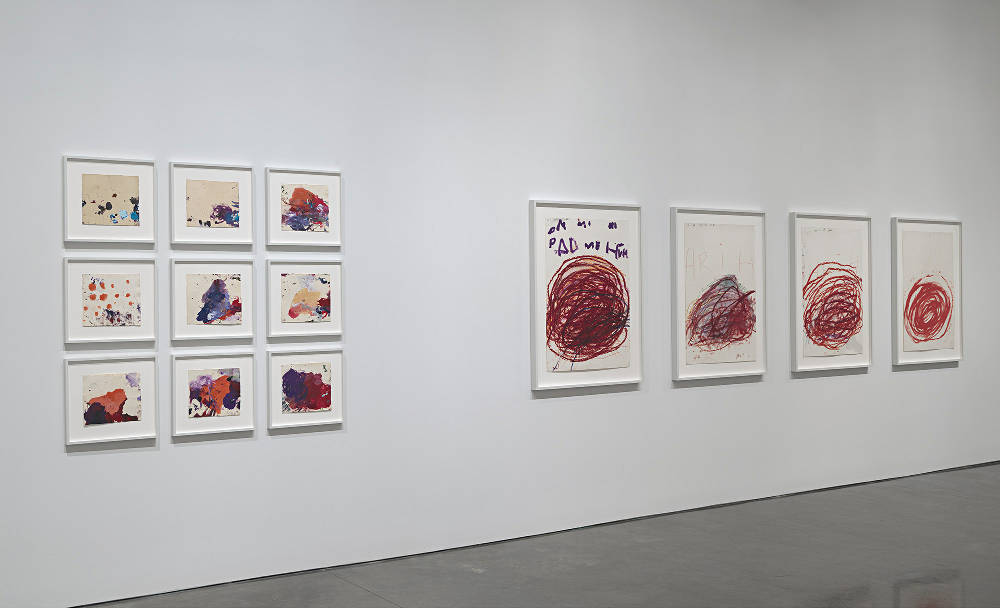
Personally, I do look at the works of artists like Malevich’s “Black Square” or the scribbles of Cy Thombly, that cost millions. I’ve always believed Art is about mastering something. Paintings, literature, music or whatever it might be, should be valued on skill, technique, style and possess some kind of beauty. For instance, an artist like Cy Twombly’s seems to miss the mark. It looks like a jumble of scrawls with no clear message, a finger-painting drawing made by a child. I find it very challenging to understand this type of art. But the fact that I’m trying to understand it, surely means it had some kind of effect on me which is the intention of pretty much every artist. He was trying to convey something. Maybe he tried to create something that didn’t comply to the traditional definition of art. Perhaps art just “exists”. There will be those who like something and those who don’t. After all, it’s supposed to be wild and imaginative, and simply free of any constraints.
What makes art beautiful is also the concept that it is a product of humans’ emotions, moods and thoughts expressed through sounds, colors, shapes, lines and images which in return evoke inspiration, motivation and imagination. For centuries upon centuries, art was used as a vehicle to gain insight into the artists’ world; their heart and mind, their vision. With every art, whether it’s a painting, sculpture, video, photography or performance, we gain a glimpse of new perspectives. Sometimes it gives us a wider scope of representation and interpretation than words do. Art speaks where words fail!
Every work of art causes the receiver to enter into a certain kind of relationship, both with the artist and all who receive the same impression. Just as words transmit thoughts, so art transmits feelings. The activity of art is based on the fact that when we witness a man experiencing an emotion, we to some extent share it. To evoke in oneself a feeling that one has once experienced, and to transmit that feeling to others through forms and colors, sounds or movements-Leo Tolstoy
Close-up of a painted canvas
Art naturally causes something to stir up in the mind. It pulls our minds into new worlds, perspectives, and even feelings. I remember visiting one particular art installation in Ljubljana, Slovenia, that evoked some strange emotions within me. This was a while back, I was probably in my early 20’s, so I can’t recall what the exact message of the exhibition was, who is the artist, or what was the purpose of it. All I recall is the “feeling” it left me with, as though it had awoken a dormant emotion.
The installation was a huge box with various pathways lit in infra-red. Each corridor had a door and a peephole for the viewer to look through. You couldn’t enter any of the doors. What I saw in one of rooms was a retro TV with some static imagery and occasional random clips of unexplainable footage.There were also some plants in pots. In another room there was an old telephone and a pile of books with a vintage radio playing. Along side of the radio there were arms and legs of a mannequin. I wish I could remember more of what I saw. But after all these years this particular installation stuck with me and I still can’t find a reason for it. It was just the way it made me feel, like I had stepped into an alternate reality or something. The real catch of the art that we see in general, is that it allows us to tell stories in our minds and to escape into a different state-of-mind. In this case, the artist used this particular medium to communicate a certain concept which was quite effective.
I believe that art plays an important role in society as a whole, and says a lot about it. It’s one of the biggest questions that comes to mind when we really, truly think about the value of art. In Kuwait, where I’m from, the art scene is becoming somewhat alive. I remember only a few years back, barely anybody paid attention to it. Now, there are galleries, exhibitions and artists emerging. There is no doubt a handful of talented artists left from the old generation.
A rising number of young artists have surfaced as well but Kuwait still needs to drive more local artistic innovation which is currently lacking in my opinion, or maybe it is there but people aren’t embracing it enough or recognizing the deep meanings behind it, particularly the youth. However, a lot of galleries around Kuwait now cater to attracting the young generation, which is a good step. Once society understands the meanings and purpose of art, it will play even a bigger role in the community. And this starts with education. It’s more than just picking up a canvas, paintbrush, splashing some colors around and calling yourself an “artist”, just for the sake of it. It’s an insult to real artists who took years to perfect their craft and signature style. It’s about connecting with people’s emotions, something that could resonate with them. But then again, it doesn’t need to be just a painting. Art encompasses cultural activities, films, sculptures or even photography. It can be anything that expresses an emotion or idea.
Sometimes, art doesn’t need to be something real or concrete in order to understand it.
Abstract Art for example, exists to inspire our curiosity about the reaches of our imagination. As American-Armenian painter once said”
“Abstraction allows man to see with his mind what he cannot see physically with his eyes.” ―Arshile Gorky
Whatever the art form, art always tries to convey some kind of energy and feeling. Does it speak to you?
So I’ve reached the end of my train of thoughts and I still couldn’t define Art. I personally think its a figment of our imaginations. Perhaps it doesn’t need a definition. Let it be free, with many meanings and interpretations. That’s the beauty of it!
(Speaking of Art, I am currently on an Art spree around Kuwait and you can read about my first visit to Kuwait’s 60’s Art Gallery here!)
The 5th edition of the annual Hospitality and Food exhibition, Horeca Kuwait, has successfully grown in popularity over the years, devoted to showcasing the latest innovations and concepts in Food & Beverage, embracing gastronomic talents and creativity, and revealing the most recent trends and progress in the country’s hospitality sector. Bringing together an array of local and international exhibitors, the event drew in a great number of chefs from across the region, who successfully put Kuwait on the culinary map once more!
Since 2015, the exhibition has risen from 190 participants to over 250 this year, consisting of local and international exhibitors, elaborate food displays, and a great number of chefs from all over region.
“Five years ago, we started Horeca in Kuwait with only 35 exhibitors and less than 100 participants in the food contests. Today, we have over 60 exhibitors and sponsors, and over 250 participants in the competition, as well as over 6, 000 visitors,” says Mohammed Najia, General secretary for Kuwait Hotel owner Association and the Director for Horeca Organization Committee and Delegue of Chaine des Rotisseurs.
The types of exhibitors included the best from regional and international restaurant and hospitality suppliers, manufacturers, food and drink producers, and catering equipment.
Najia added that people have expressed great interest in the field of hospitality, which is growing tremendously at a fast pace in Kuwait. “For Kuwait, this means there is a sector that is emerging which can aid economic growth. There is a need to showcase what is in that sector. Hospitality is a lifestyle, after all,” he continues.
Nabila Al-Anjari, General Manager of Leaders Group (the licensee for HORECA Kuwait), stated, “Each edition of Horeca Kuwait is getting better and each one marks the beginning for greater ventures and endeavors in the world of food and hospitality. I wish to congratulate the individuals who have maintained the level of performance and excellence throughout the years.” She continued, “The show has grown incredibly, with many new categories, bigger stands, new exhibitors, and people have become increasingly aware. A lot of new Kuwaiti entrepreneurs are penetrating the market and many young Kuwaiti chefs are also surfacing.”
Recognized as a networking hub, the exhibition is the ideal business avenue where exhibitors meet to identify business opportunities and expand their networks. Antoine Obeid, Regional Managing Director of the Kuwaiti –based Farmland General Trading CO. and gold sponsor of the show commented, “Year after year we are in the same sharing concept and spirit, where we meet with all the chefs and other people in the hospitality industry.”
With each new edition, Horeca Kuwait has showcased quality products, innovative branding design concepts, and consumer engagement techniques that tell a unique brand story and create a lasting impression with attendees.
Marketing Manager of Al Yasra foods and golden sponsor for the third consecutive year, Gebran Charbine has witnessed an increasing number of visitors and many new innovative specialty items, in addition to easy-solution products for chefs, purchasers, managers, and restaurant owners. “I see a lot of creativity inputted this year, especially the booths and this can help attract the right market for your brand,” he says. Gebran further conveys that for Kuwait, this means that there is a growing business in the food & beverage and hospitality sector that can drive to bring in tourism and expand the country as one of the global leaders in the hospitality industry.
Adding to that, Operations Manager for MN Al Hajri holding Haagen-Dazs, illy, and Dilmah Tea Lounge has witnessed various developments in terms of food operations. “It is nice to bring everyone in a single room where everybody has their own identity that presents the best of them and draws you in to their products. The food & beverage industry is the biggest thing in Kuwait, and everyone can benefit from these activities that can add value to the consumer and the brand.”
Ali Maghnie, executive manager for Mabrook Hotel Supplies, said, “Kuwait is a small market but its apparent that people are investing in their booth design and always trying to create something new.”
Khaled Sharaf, Operations Manager for Zalatimo Sweets Company and one of the exhibitors at the show, commented, “This is our second year in Horeca Kuwait and we are introducing a new franchise that will be existing in Kuwait soon. In this edition, I have certainly noticed improvements in the culinary activities and the product range. It has been an ongoing pleasant experience.”
The live culinary show reveals some of the very best talents in the country’s gastronomy scene encompassing new culinary horizon. Joining to participate in the live culinary show for a panel of nine international culinary judges from Italy, Germany, France, Lebanon, KSA, and Egypt, chefs from around Kuwait enter the highly equipped kitchens where they passionately work to surprise the expert judges with their savoire-faire as viewers cheer them on.
Samaan Hilaal, Culinary Consultant of MCC Catering and Head of the Culinary Show expressed, “I am pleased to see how much the exhibition has developed, especially the growing number of category specialists and international judges of such high caliber and professional experience,” For a small country like Kuwait, Hilaal emphasized that he is impressed to see Horeca Kuwait growing and imposing a mark on the international culinary world with each new edition.
Chef Lucien Veillet, President of Academie Nationale De La Cuisine in France says, “I am here to support my colleagues in this mission and to support hospitality services in promoting exceptional cuisine. This is my first visit to Kuwait and I am surprised by the culinary techniques and mastery.” He continues, “My favorite has been the ice carving contest which made a very professional statement and it was impressive to see them in action. Additionally, the six-course competition was incredible. It was an interesting product exchange between chefs and I enjoyed the spirit of the exhibition.” Lucien concluded by saying that it would be a great pleasure to see the continuous progress in the next edition of Horeca Kuwait.
Lorenzo Cogo, an Italian chef from a small village called Marano Vicentino near Venice, and the first youngest owner of a one Michelin Star restaurant called EL COQ, remarked, “As a newcomer to the region, I find it a very interesting platform where I had acquired a good understanding of the standard and style of the food here and the opportunity to delve into the ingredients and culture. “I hope to infuse my experience here in to my cooking style back home,” he continued.
Youssef Akiki, Executive Chef of Burgundy Restaurant in Beirut says, “Whenever I smell any exhibition happening anywhere, it is great news for me. Horeca Kuwait is a great opportunity to mingle with other chefs and the concept of exchange is perfect. The exhibition has potential to grow even bigger in comparison to other regions, but in the end the great level of quality here overrules quantity.”
Akiki conveyed his surprise by the level of dishes coming out, especially the live meat show and sushi competition. He foresees that local chefs will have the opportunity to join the global judges one day and hopes that the show grows to become even more international.
Karim Fares, deputy general manager, for Food Choice co. expressed, “We were extremely impressed by the way the exhibition took place and the amount of attention it managed to garner. We wish to continue being associated with the event and hope the exhibition gets only better in the coming years.”
Karlheinz Haase, Certified Master Chef from Germany and former team manager of the German National Culinary team for 12 years, expressed, “I am stunned to see the talented young chefs demonstrate their skills on a live stage in front of people. This kind of arena allows chefs to experience added pressure to perform hard and show off their culinary abilities. We are in the middle of all the industry partners and a business arena of a very high standard that also serves as a good auditorium for the chefs.”
Chef Tareq, Certified Master Chef in Meat and Livestock as well as trainer of the Olympic Egyptian team, and Emirati team says, “I could see how immersed the chefs were in the culinary shows and they really put their heart into their work.”
He added, “For an exhibition that is still so young and in its infancy, it has exceeded compared to the rest. The quality has improved, contests have become more heated, and very soon the international judging criteria will grow.”
Each dish was an outstanding expression of innovation where each plate was transformed into a surprisingly inventive work of art. Chef Tareq was impressed by the chefs’ creativity to think outside the box, reinventing gastronomy in unconventional ways and coming up with new dimensions of plating dishes. He adds that the annual event is essential to Kuwait for renewing business relationships and creating invaluable relationships.
If one thing is clear, the events have given exposure to the quality of Kuwait’s developing hospitality and tourism sector, strengthening the country’s position in the international culinary world.
Dr. Ghassan Aidi, Chairman of Hospitality Services, Honorary President of International Hotels and Restaurants Association, and President and founder of Mediterranean Hotel and Restaurant Association says that the exhibition is 25 % bigger than when it first began. After five visits to Horeca Kuwait he shares that “there has been a surge of people, and more innovation which is very good for a country with a developing Tourism and Hospitality sector and there is a lot more room to build it up.” He continues, “This puts Kuwait on the touristic map as chefs demonstrate the culinary art and great quality of food in the country. There are a number of talented Arab chefs working in Kuwait and they can easily compete with the international chefs. Hopefully in the future I will also see more female chefs in this line of business.”
Horeca Kuwait continues to roll out new editions where creativity and ideas come to life, further leveraging the platform to enhance experiences in the ever-evolving food & hospitality industry.
Jumeirah Messilah Beach Hotel & Spa Kuwait launched its first Turkish Delights festival and welcomed three Turkish chefs aboard from Bodrum Palace to revive the authentic taste of Ottoman cuisine.
The Turkish-themed nights feature specially-prepared menus crafted by the culinary expertise of the Turkish master chefs, with extensive offerings showcasing the passion, skills, and tradition of Turkish food.
A distinguished history and centuries of evolution have bestowed upon Turkish cuisine a variety of dishes, enriched by the chefs and transformed to heights of delicacy. Traditional gastronomic treats of different regions ranged from the comfort food of Turkish homes, the renowned Toyga Asi yoghurt soup, to the freshly oven-baked rustic bread and flavorful griddled meats of Kuzu Kuseleme and Manti stuffed ravioli, to the aromatic assortments of desserts like oven-baked Sutlac mastic rice pudding, the legendary halawa, and many more sweet Turkish specialties!
Homemade Turkish Pide bread
Seasoned with Ottoman indulgence
Pudding with raspberry icecream
Toyga Asi, traditional Turkish yoghurt soup
The Turkish-themed nights will be available through-out December only so hurry and enjoy the legacy of Ottoman cuisine!
And now…a video of the Turkish Chef making the sophisticated homemade Turkish bread (Turkish Fatayer).
Let me start off by saying that I am a huge fan of video games. The adventure and role play genres are my favorite. And because of my enthusiasm for video games, I believe they are far more than what people define them these days- that they are a waste of time and promote lack of productivity. The first thing that comes to some peoples’ minds about video games, is that they are merely about mindless shooting and that only boys/children play them (don’t be surprised that I’m a female who enjoys playing ps4 and Grand Theft Auto!). But in fact, video games are an imagination engine and can even be inspirational, much like a book. What video games have reached is a middle-ground between books and movies, borrowing elements from both sides to intertwine narrative and visual storytelling. Unlike movies and books where the story is told as a sequence of events, games give you an avenue to discover the story on your own path.
There’ve been endless debates about games in general. Common debates revolve around the question of “Do games shape or influence your personality?” or if they contribute to breeding violent behaviors in children. This is definitely not going to be another one of those topics. Instead, I would like to switch up it up by delving into a question that is equally, if not more so, interesting but has not been gaining much attention- Does your personality influence the types of games you play and how you play them? Seeing how a variety of “Choice” games are being introduced into the world of gameplay, this is an intriguing topic to bring up.
The gamescape is now filled with personality and moving stories to tell in which you empathize with the characters and place yourself in their shoes. A prime example are “Telltale”games that employ deep narratives to create an immersive gaming experience for players. Games like “The Walking Dead”, “Life is Strange”, “The Wolf Among us”and other fantastic game narratives like Heavy Rainand Red Dead Redemption, have set the foundation for the art of storytelling in the realm of video games.
Introducing story-driven games that are interactive and engaging have paved the way for so much potential in this medium, one that is akin to movies in the way they tell stories. Except in video games you have the ability to control the flow of the story and how it unfolds as you play. You are placed in a position to contemplate what choices and decisions you should make, and be left wondering whether they are going to leave a good or bad impact and outcome on your character’s destiny. It’s not mindless gaming anymore, for me, its about the storyline that connects you to the game on a deeper level. A story that is molded by me. What other mediums allow for this type of experience? Video games!
The choices made in gaming aren’t just plain decisions. Emotionally gripping plots involve meaningful decisions that leave an imprint on you long after you finish the games’ story. During an apocalypse, would you loot an abandoned car left there with supplies all for the taking and leave the owners (possibly a family) of the car empty-handed and starved, or would you choose to steal the supplies and help yourself and your team survive? Should you save the friend who just stumbled and fell as you are chased by a horde of zombies in pursuit behind you, hence holding back the group and facing the possibility of being devoured, or leave him behind and saving your self and others from the danger? Would you have the guts to shoot a child who has succumbed to a zombie bite to prevent him from turning or should you leave him there to endure the pain? The game is fraught with such deliberation that must be made in a span of a few seconds. Sometimes you pause to think what you would do in a similar real-life situation and it leaves you conflicted, usually resulting in being put under pressure and questioning which decision is the right one.
After I was done playing The Walking Dead, I found myself attached to the protagonist because the character appealed to my emotional core. The main character finds a little girl whose parents have left on the weekend the apocalypse hits and the game begins to explore what it means to become a guardian for this girl, and its up to you to decide how to go about it. When I first started playing the game, I was expecting another dramatic zombie survival game. But what was challenging was not catching a zombie coming your way and in panic clicking the wrong button as a result of a knee jerk reaction. The challenge is when certain characters elicit instincts in you, be it protection of other characters in the game or choosing who to emphasize with more, hence making some tough decisions. The more you play, the more the world set in the game becomes alive through its richness and intricacy and the more believable the characters become. There are no levels and no rewards, you just progress through the story as you unlock mysteries and solve clues, like a storytelling puzzle that concludes with a nice experience.
The question is, do personality traits drive certain choices within the game? They certainly do. As in real-life, our personality influences the choices we make. So far, this question requires more research and studies have already identified that Neuroticism, Extraversion, Openness,Conscientiousness and Agreeableness are 5 personality characteristics that influence your gameplay be it your role in the game (good guy, or bad guy?) or the genre you enjoy most. It is also worth noting that mood plays a big role as well.
Good stories can come from anywhere; book, films, games. Video games are another mode of media with a potential to tell beautiful and compelling stories in a fantasy world of amazing visual effects and unique, imaginative characters that are changing the perceptions of gaming. But what it has to its advantage is giving the player the power of control and influence in the story. It’s just another adventure with many worlds to explore and most importantly its an emerging art form that still has a lot in store!
If you would like to resurrect the true taste of the mouth-watering shawarma you can drop by Mearmisha, a small shawarma boutique featuring a range of authentic and traditional roasted Shawarma is located at Mahboula, Kuwait.
The restaurant caters to a variety of tastes through specially prepared sliced beef, chicken or vegetables each of which are marinated with a mélange of flavorful spice combinations, all tucked inside warm fresh-baked flatbread, topped with fresh ingredients, and ultimately dressed with a selection of five different sauces giving you an abundance of flavors.
The shawarma master slices off shreds of spiced meat from the rotisserie after which the sizzling shavings of the tender meat with its crispy edges are encased in a warm bread and kept succulent with a variety of flavorful garlic and herb sauces.
After being rolled and folded, the sandwich is then pressed onto a grill to give the bread an extra delightfully toasted crunch and eventually that’s a wrap! You can watch the entire preparation of this fulfilling ensemble from start to finish from an open kitchen view as you will be tantalized and anticipating your first bite.
Together with your meal, salads of taboula and fatoush are available as well as vine leaves and cabbage rolls. Meamrisha also serves an array of sandwiches including falafel, grilled haloumi, labnah, turkey, and a range of other saj items.
You may choose to have a standalone meal or opt for a family or diwaniya meal for a sharing feast, in which you can taste the broad variety of shawarmas comprised of beef and chicken carefully arranged onto a platter, alongside tasty accompaniments of onion rings, jalapeno cheddar poppers, and French fries.
family meal
Additionally, a variety of chutneys are offered; a relish made up of fruits, spices, and herbs that you may want to dunk your choice of sides in. A nice selection of tasty, sinful desserts are available on the go, including red velvet cheese cake, chocolate mousse, oreo mousse, and more.
If you are pondering about where to have a quick bite, Mearmisha makes for an indulgent take-out meal.
If your morning hunger pangs have awakened, The Butcher’s Den local Kuwaiti steakhouse is offering a new menu of breakfast delights to enjoy on a pleasing weekend morning. The meat-centric restaurant will guarantee to rouse you from your slumber with a delectable breakfast feast.
The menu’s scope is imaginatively original and profoundly memorable. The Butcher’s Den rendition of traditional breakfast offerings of eggs, French toast, crispy waffles, and plump pancakes are married with a meaty accompaniment.
Known for its grass-fed beef, the main course is filled with the steakhouse’s signature fall-off-the-bone variously graded meats that serve to beef up your breakfast. Served to you in the beginning is an assorted bread basket for you to slather up your toasted corn bread toast with jam and homemade butter.
Firstly, a popular accompanying side is the beetroot and goat cheese salad, which you can opt to be served with your main dish.
Slather up the toasted corn bread toast with homemade butter and jam.
One of your choices is the stack of short rib pancakes laced with maple syrup and topped with two fried eggs.
A favorite, is poached egg sitting atop a bed of crisp braised shredded short ribs that lay perfectly beneath to sop up the egg yolk.
Another unusual but commonly ordered choice is the “Qout” bowl consisting of a layer of mashed sweet potato at the bottom, loaded with a pile of tender shredded ribs and topped off with jalapenos and a tower of caramelized onions at the peak.
“Qout” Bowl
Most of the dishes come with eggs that crown your meal and can be cooked to your liking with a desirable amount of runniness that cascades down your savory dish. Another delicious choice that is worth considering, cradles a poached egg that is nestled into an airy puff pastry pocket along with a strip of crunchy bacon and sautéed spinach.
You can add a refreshing drink of freshly-squeezed juices – highly recommended is watermelon which is pleasingly sweet and hydrating.
A number of side dishes can accompany your main meal. A requisite are the homemade beef sausages that are strikingly supple and utterly flavorsome. The first juicy bite leads to a perfect blend of fresh tender meat redolent with a mélange of spices and herbs. Other side choices include hash browns, beans, spinach mascarpone and much more.
For the finale, you wander into the dessert zone where you’ll find treats of pancakes and waffles overlaid with the sweetness of fresh assorted berry compote, a rich and thick sauce that mingles with the scoop of ice-cream beside it.
The Butcher’s Den signature French toast consists of triple-leveled golden brown toasts, lightly buttered, and layered with jam, Nutella, and peanut butter.
Situated at the Bidaa’ strip of restaurants, you can indulge in the Butcher’s Den hearty breakfast from 8:00 am until 1:00pm every day of the week.


A model of an old Japanese barber shop


 We entered the historic neighborhood, Higashiyama district, leading up to the next temple. Evoking the look of old Tokyo, the street took us up a steep journey towards Kiyomizu-dera temple. Along the way, there are dozens upon dozens of shops selling Kyoto specials from snacks to handicrafts and souvenirs that we could spend hours exploring!


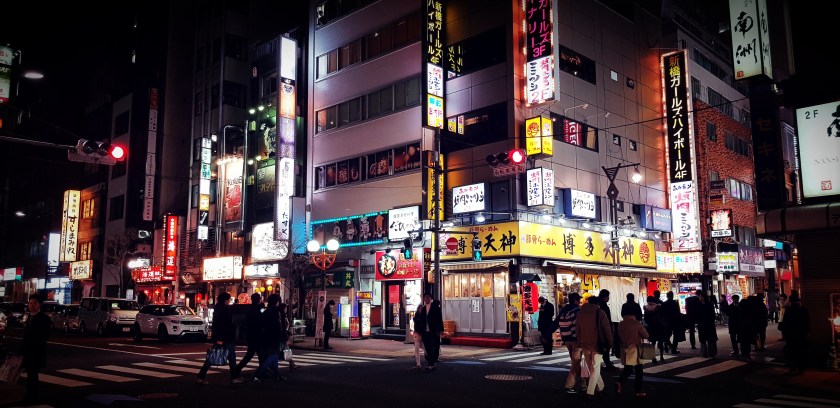




 Jumeirah Messilah Beach Hotel & Spa Kuwait launched its first Turkish Delights festival and welcomed three Turkish chefs aboard from Bodrum Palace to revive the authentic taste of Ottoman cuisine.


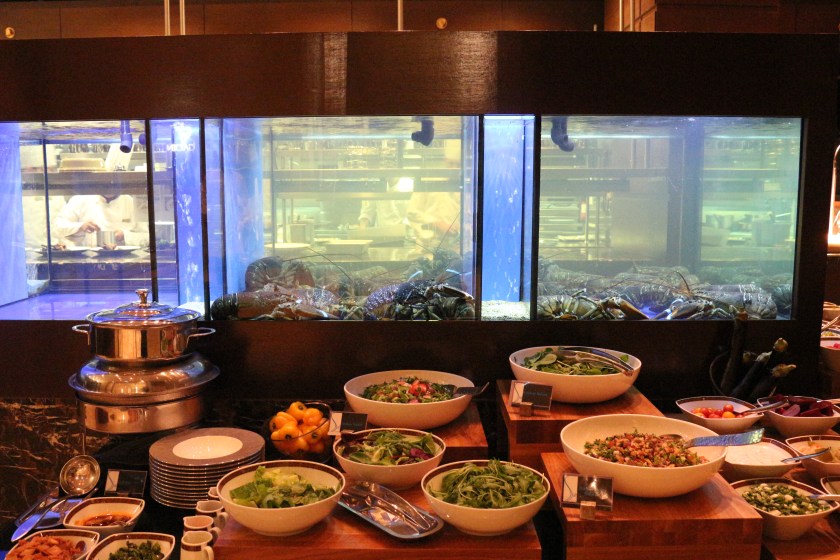


 The choices made in gaming aren’t just plain decisions. Emotionally gripping plots involve meaningful decisions that leave an imprint on you long after you finish the games’ story. During an apocalypse, would you loot an abandoned car left there with supplies all for the taking and leave the owners (possibly a family) of the car empty-handed and starved, or would you choose to steal the supplies and help yourself and your team survive? Should you save the friend who just stumbled and fell as you are chased by a horde of zombies in pursuit behind you, hence holding back the group and facing the possibility of being devoured, or leave him behind and saving your self and others from the danger? Would you have the guts to shoot a child who has succumbed to a zombie bite to prevent him from turning or should you leave him there to endure the pain? The game is fraught with such deliberation that must be made in a span of a few seconds. Sometimes you pause to think what you would do in a similar real-life situation and it leaves you conflicted, usually resulting in being put under pressure and questioning which decision is the right one.
 After I was done playing




 The shawarma master slices off shreds of spiced meat from the rotisserie after which the sizzling shavings of the tender meat with its crispy edges are encased in a warm bread and kept succulent with a variety of flavorful garlic and herb sauces.